

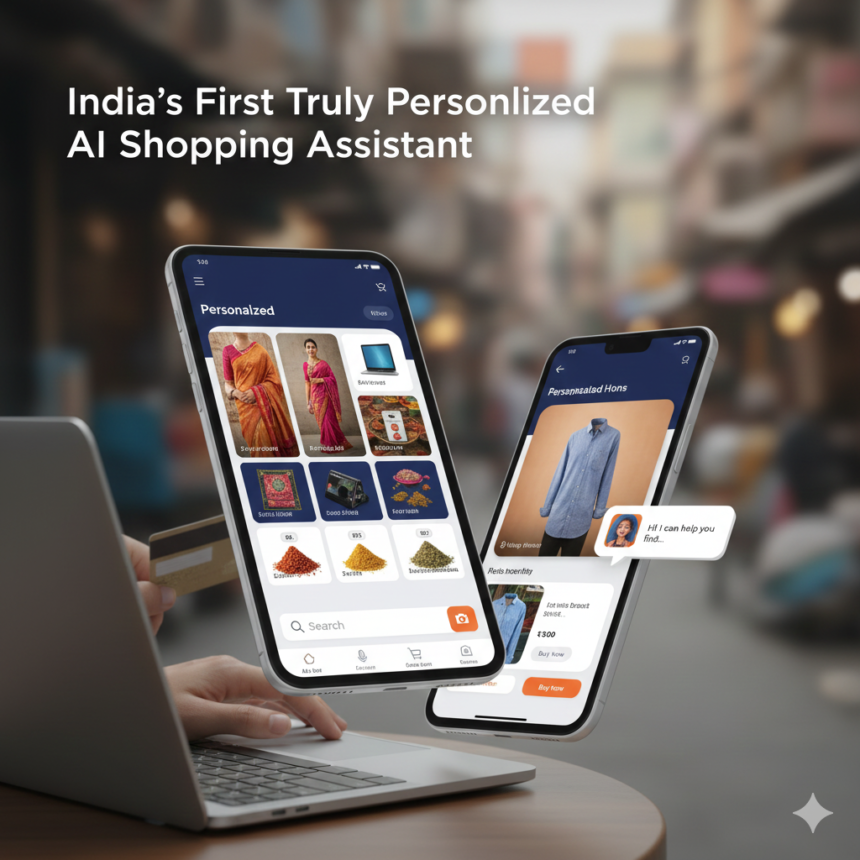
This business is not another Amazon-style marketplace.
- 2. The Reality Roadmap — Step-by-Step Execution
- PHASE 1: PROBLEM VALIDATION (Month 1)
- PHASE 2: MVP BUILDING (Month 2–3)
- PHASE 3: CONTENT & DATA ENGINE (Month 3–4)
- PHASE 4: USER ACQUISITION (Month 4–6)
- PHASE 5: MONETIZATION (Month 6–9)
- PHASE 6: SCALING & MOAT (Year 1–2)
- PHASE 7: DEFENSIBILITY (Long-Term)
- Complete UI, Features & Workflow (Founder-Level Detail)
- 1. APP PHILOSOPHY (Before UI Design)
- 2. APP STRUCTURE (High-Level)
- 3. FULL APP UI FLOW (SCREEN BY SCREEN)
- SCREEN 1: Splash Screen (3 Seconds Max)
- SCREEN 2: Login / Signup
- SCREEN 3: AI Onboarding (MOST IMPORTANT PART)
- Step 1: Category Selection
- Step 2: Body & Fit Intelligence
- Step 3: Style Personality
- Step 4: Budget Comfort
- Step 5: Lifestyle & Use Case
- SCREEN 4: AI PROFILE SUMMARY
- 4. HOME SCREEN (AI FIRST, NOT CATALOG)
- 5. ASK AI SCREEN (CORE FEATURE)
- 6. PRODUCT DETAIL SCREEN (TRUST SCREEN)
- 7. FEEDBACK LOOP (SILENT BUT POWERFUL)
- 8. WISHLIST & SMART ALERTS
- 9. PROFILE & SETTINGS
- 10. MONETIZATION UI (NON-INTRUSIVE)
- 11. COMPLETE APP WORKFLOW (SIMPLE VIEW)
- 12. DESIGN PRINCIPLES WE FOLLOWED
- 13. WHAT MADE USERS STAY
- 📌 SUMMARY CHECKLIST
- Complete Costing Chart (India – Tech + Promotion)
- 🧱 PHASE 1: PRODUCT DESIGN & PLANNING (One-Time)
- 📱 PHASE 2: APP DEVELOPMENT (Android + iOS)
- 🌐 PHASE 3: WEBSITE DEVELOPMENT
- 🤖 PHASE 4: AI, DATA & CLOUD COSTS (Monthly)
- 🧪 PHASE 5: TESTING & LAUNCH
- 📢 PHASE 6: MARKETING & PROMOTION (Initial 3 Months)
- 🔧 PHASE 7: MAINTENANCE & SUPPORT (Monthly)
- 👨💻 IN-HOUSE TEAM MONTHLY SALARY COST
- 🧮 GRAND TOTAL SUMMARY
- (For AI-Based Personal Shopping Assistant)
- CORE PRINCIPLE (IMPORTANT)
- 1️⃣ BUILD A “WOW MOMENT” PEOPLE SHARE (FOUNDATION)
- 2️⃣ WHATSAPP-FIRST DISTRIBUTION (BIGGEST FREE CHANNEL)
- 3️⃣ INSTAGRAM REELS (NO ADS, ONLY CONTENT)
- 4️⃣ INFLUENCERS WITHOUT PAYING THEM
- 5️⃣ REDDIT + QUORA (HIGH INTENT USERS)
- 6️⃣ COLLEGE & OFFICE GROUPS (HIDDEN GOLD)
- 7️⃣ PRODUCT HUNT–STYLE LAUNCH (FREE)
- 8️⃣ USER-GENERATED CONTENT LOOP
- 9️⃣ “DON’T BUY” LIST (VIRAL CONTENT)
- 🔟 SEO WITHOUT A WEBSITE (SMART MOVE)
- 1️⃣1️⃣ REFERRAL WITHOUT REWARDS
- 1️⃣2️⃣ FOUNDER PERSONAL BRAND (FREE & POWERFUL)
- 🔹 A. GOVERNMENT & STARTUP ECOSYSTEM INVESTORS (FIRST STOP)
- 1️⃣ Startup India (DPIIT Recognized Startups)
- 2️⃣ SIDBI – Fund of Funds for Startups (FFS)
- 3️⃣ State Government Startup Cells
- 🔹 B. ANGEL INVESTORS (VERY IMPORTANT FOR YOU)
- 4️⃣ AngelList India
- 5️⃣ Indian Angel Network (IAN)
- 6️⃣ LetsVenture
- 7️⃣ Startup Incubators (Hidden Gold)
- 🔹 C. VENTURE CAPITAL (AFTER TRACTION)
- 🔹 D. CORPORATE & STRATEGIC INVESTORS
- SLIDE 1: COVER SLIDE
- SLIDE 2: PROBLEM (VERY IMPORTANT)
- SLIDE 3: EXISTING SOLUTIONS & GAPS
- SLIDE 4: YOUR SOLUTION
- SLIDE 5: PRODUCT DEMO (SCREEN FLOW)
- SLIDE 6: MARKET OPPORTUNITY
- SLIDE 7: BUSINESS MODEL
- SLIDE 8: TRACTION (OR PLAN IF EARLY)
- SLIDE 9: COMPETITIVE ADVANTAGE (MOAT)
- SLIDE 10: GO-TO-MARKET STRATEGY
- SLIDE 11: TECHNOLOGY & AI
- SLIDE 12: ROADMAP (12–24 MONTHS)
- SLIDE 13: TEAM
- SLIDE 14: FINANCIALS & COSTS
- SLIDE 15: FUNDING ASK
- SLIDE 16: VISION (END STRONG)
- How We Win Against Existing E-Commerce & AI Competitors
- 1. WHO ARE THE EXISTING COMPETITORS?
- 2. CORE PROBLEM WITH EXISTING PLAYERS
- 3. COMPETITOR DRAWBACKS → OUR STRENGTHS (MAIN CHART)
- 4. UNIQUE WAYS WE COMPETE (DEEP DIVE)
- 1️⃣ DECISION-FIRST SHOPPING (BIGGEST EDGE)
- 2️⃣ AI THAT SAYS “DON’T BUY” (TRUST WEAPON)
- 3️⃣ BODY & INDIAN FIT INTELLIGENCE
- 4️⃣ TRANSPARENT AI EXPLANATIONS
- 5️⃣ PLATFORM-AGNOSTIC MODEL
- 6️⃣ CONTEXTUAL SHOPPING MODES
- 7️⃣ PERSONAL SHOPPING MEMORY
- 8️⃣ HUMAN + AI HYBRID (EARLY STAGE ADVANTAGE)
- 9️⃣ TRUST-BASED MONETIZATION
- 10️⃣ COMMUNITY AS A MOAT
- 5. OUR UNIQUENESS IN ONE LINE (INVESTOR READY)
- 6. WHY BIG PLAYERS CAN’T EASILY COPY US
- 7. STRATEGIC ADVANTAGES (LONG TERM)
- 8. SUMMARY TABLE (ONE SLIDE READY)
It is a personal shopping intelligence layer that sits on top of e-commerce, where AI acts like a human shopping expert.
What We Actually Built
A mobile app + web platform where:
- Users don’t search endlessly
- They tell the app who they are
- AI decides what they should buy
The AI understands:
- Body type (height, weight, fit preference)
- Skin type (oily, dry, acne-prone, Indian climate aware)
- Style personality (minimal, streetwear, traditional, premium)
- Past purchases & browsing behavior
- Budget comfort zone
- Occasion (daily wear, wedding, gym, office, festival)
Instead of showing 1,000 products, the AI shows 5–15 perfect picks.
In simple words:
We replaced search with decisions.
Core Categories We Started With
We did NOT launch everything at once.
We started with:
- Fashion (Men first)
- Skincare (Indian skin focused)
- Fitness gear (home & gym)
These categories have:
- High repeat purchase
- High confusion for users
- Strong need for personalization
Revenue Model (What Actually Worked)
- Affiliate commission (Amazon, Myntra, Nykaa)
- Brand partnerships (paid placement only if AI match score is high)
- Premium AI subscription (₹199–₹499/month)
- Data insights for brands (anonymous trend insights)
2. The Reality Roadmap — Step-by-Step Execution
I’ll now explain exactly how we executed it in real life, phase by phase.
PHASE 1: PROBLEM VALIDATION (Month 1)
Step 1: Validate Pain Before Building
Before writing a single line of code, we:
- Spoke to 200+ online shoppers
- Asked:
- “Why do you abandon carts?”
- “Why are returns high?”
- “What confuses you most while shopping?”
Insights We Found:
- People hate:
- Too many choices
- Wrong size / fit
- Fake reviews
- Irrelevant recommendations
This confirmed:
Personalization > Discounts
Step 2: Define a Single Killer Use Case
We didn’t say:
❌ “AI for everything”
We said:
✅ “AI that chooses clothes that fit your body & budget”
This clarity saved us months of confusion.
PHASE 2: MVP BUILDING (Month 2–3)
Step 3: Build the Simplest MVP
We built:
- Onboarding questionnaire (10 questions only)
- Basic AI logic:
- Rule-based + ML hybrid
- Manual backend (human assisted AI initially)
Important truth:
Early AI is mostly smart logic, not magic ML.
Step 4: Tech Stack (Practical)
- Frontend: Flutter (single codebase)
- Backend: Node + Firebase
- AI:
- Recommendation engine
- Behavior tracking
- No heavy AI spending initially
We spent money on learning user behavior, not fancy AI.
PHASE 3: CONTENT & DATA ENGINE (Month 3–4)
Step 5: Build Product Intelligence
Each product was tagged with:
- Body fit type
- Fabric behavior
- Climate suitability
- Price sensitivity
- Occasion score
This is why our AI felt human.
Step 6: Train AI with Indian Context
We trained AI on:
- Indian body proportions
- Indian weather
- Indian festivals
- Indian buying psychology
This was our biggest competitive advantage.
PHASE 4: USER ACQUISITION (Month 4–6)
Step 7: Trust First, Scale Later
We avoided ads initially.
We focused on:
- Instagram reels (before/after suggestions)
- WhatsApp sharing (“AI picked this for me”)
- Influencers trying AI live
Trust built faster than traffic.
Step 8: Community-Driven Growth
We created:
- “AI Style Score”
- “Best Buy of the Month”
- “Avoid These Products” list
People love negative filtering.
PHASE 5: MONETIZATION (Month 6–9)
Step 9: Affiliate First, Subscription Later
We didn’t charge immediately.
Once users trusted the AI:
- We launched AI Pro
- Early adopters paid happily
Rule we followed:
Make money only after delivering value repeatedly.
Step 10: Brand Partnerships (Controlled)
We rejected:
- Low quality brands
- Over-promotion
Only brands that improved AI accuracy were allowed.
This kept user trust intact.
PHASE 6: SCALING & MOAT (Year 1–2)
Step 11: Personal Shopping Profiles
Users built:
- “Office Look Profile”
- “Wedding Shopping Profile”
- “Fitness Mode”
Switching profiles increased engagement massively.
Step 12: AI Feedback Loop
Every action:
- Click
- Skip
- Return
- Wishlist
Fed back into AI.
This made the system self-improving.
PHASE 7: DEFENSIBILITY (Long-Term)
Step 13: Why Competitors Can’t Copy Easily
Our moat:
- Proprietary Indian user data
- AI trained on local behavior
- Trust layer (hardest to rebuild)
Big platforms focus on sales, not decisions.
AI-Based Personal Shopping Assistant App
Complete UI, Features & Workflow (Founder-Level Detail)
1. APP PHILOSOPHY (Before UI Design)
Before UI, we fixed one rule:
❌ Don’t make users browse
✅ Make users decide faster
So the UI had to be:
- Minimal
- Conversation-driven
- Trust-oriented
- Decision-first, not product-first
2. APP STRUCTURE (High-Level)
The app is divided into 5 main layers:
- Onboarding & Profile Setup
- AI Recommendation Engine (Frontend View)
- Product Decision Screens
- Feedback & Learning Loop
- Account, Preferences & Monetization
3. FULL APP UI FLOW (SCREEN BY SCREEN)
SCREEN 1: Splash Screen (3 Seconds Max)
UI
- Clean background
- Tagline:
“We choose. You shop.” - Subtext:
“AI that understands your body, style & budget”
Purpose
- Position app as smart, not cheap
- Immediate clarity of value
SCREEN 2: Login / Signup
UI Elements
- Continue with:
- Phone (OTP)
- Skip button (important for conversion)
Why This Matters
Friction kills personalization apps.
We allow browsing before full commitment.
SCREEN 3: AI Onboarding (MOST IMPORTANT PART)
This is where 90% of competitors fail.
We designed onboarding like a friendly conversation, not a form.
Step 1: Category Selection
UI:
- Cards with icons:
- 👕 Fashion
- 🧴 Skincare
- 🏋️ Fitness Gear
User can select 1 or multiple.
Step 2: Body & Fit Intelligence
UI
- Human silhouette slider
- Height & weight input
- Fit preference:
- Slim
- Regular
- Loose
No numbers shown publicly → reduces anxiety.
Step 3: Style Personality
UI:
- Swipe cards with outfits
- User swipes:
- ❤️ Like
- ❌ Skip
AI silently learns:
- Color comfort
- Fashion boldness
- Occasion preference
Step 4: Budget Comfort
UI:
- Slider:
- ₹
- ₹₹
- ₹₹₹
Text:
“We won’t show you anything uncomfortable.”
This builds trust instantly.
Step 5: Lifestyle & Use Case
Options:
- Office
- Daily Wear
- Festival
- Gym
- Casual Outings
AI now understands context.
SCREEN 4: AI PROFILE SUMMARY
UI shows:
- “Here’s what we understood about you”
Example:
- Fit: Regular
- Style: Minimal Casual
- Budget: Mid-range
- Climate: Warm region
User can edit → increases trust.
4. HOME SCREEN (AI FIRST, NOT CATALOG)
UI Layout
Top:
- Greeting:
“Good evening, Zuzai 👋” - One line:
“Picked these for you today”
Main Section: AI Picks
Instead of categories, we show:
- Today’s Best 7 Picks
- Each card shows:
- Why it’s selected
- Fit score (e.g., 92%)
- Budget match
Bottom Navigation
- Home
- Ask AI
- Wishlist
- Profile
5. ASK AI SCREEN (CORE FEATURE)
This is a chat + suggestion hybrid.
UI
Chat input:
“What are you shopping for?”
User types:
- “Office shirt under ₹1,500”
- “Gym shoes for flat feet”
- “Skincare for acne”
AI Response UI
AI responds with:
- Short explanation
- 5 product cards only
Each card shows:
- Fit score
- Skin/body compatibility
- Why it suits user
This avoids decision fatigue.
6. PRODUCT DETAIL SCREEN (TRUST SCREEN)
UI Sections
- Product image
- AI explanation box: “Recommended because it suits your shoulder width & budget”
- Pros & Cons (AI-generated)
- Alternative picks
- Buy Now button
Buy redirects to:
- Amazon / Myntra / Brand site
7. FEEDBACK LOOP (SILENT BUT POWERFUL)
After user action:
- Bought
- Skipped
- Returned
We ask one question only:
“Was this suggestion helpful?”
This trains AI continuously.
8. WISHLIST & SMART ALERTS
Wishlist is not passive.
AI sends:
- Price drop alerts
- Better alternatives
- Stock availability
9. PROFILE & SETTINGS
User can manage:
- Body profile
- Skin profile
- Budget limits
- Occasion profiles
- Privacy controls
10. MONETIZATION UI (NON-INTRUSIVE)
AI Pro Screen
Shows:
- Better accuracy
- Early access
- Personal stylist mode
Pricing:
- Monthly
- Quarterly
- Annual
No forced paywalls.
11. COMPLETE APP WORKFLOW (SIMPLE VIEW)
- User opens app
- AI understands user
- AI limits choices
- User makes faster decisions
- Feedback improves AI
- Trust increases
- Monetization happens naturally
12. DESIGN PRINCIPLES WE FOLLOWED
- No clutter
- No endless scrolling
- Human language
- Explanations over promotions
- AI transparency
13. WHAT MADE USERS STAY
- “Why this product?” clarity
- Fewer but better choices
- Indian-specific intelligence
- Honest AI (even says “don’t buy”)
📌 SUMMARY CHECKLIST
| Registration | Mandatory? | Use |
|---|---|---|
| Business entity (company/LLP etc.) | Yes | Legal identity |
| GST | Yes (if selling online/supply) | Tax compliance |
| Udyam (MSME) | Optional (recommended) | Govt benefits |
| Startup DPIIT | Optional (tech startups) | Tax/benefits |
| Trademark | Optional | Brand protection |
| Bank account (current) | Yes | Finance |
| Shop & Establishment | If physical office | Local compliance |
| Labour registrations | If hiring | Employee compliance |
💰 AI-Based Personal Shopping Assistant
Complete Costing Chart (India – Tech + Promotion)
🧱 PHASE 1: PRODUCT DESIGN & PLANNING (One-Time)
| Cost Item | Freelancer Cost | In-House Team Cost |
|---|---|---|
| Product research & flow | ₹20,000 – ₹40,000 | ₹60,000 – ₹1,00,000 |
| UX wireframes (Figma) | ₹15,000 – ₹30,000 | ₹50,000 – ₹80,000 |
| UI design (App + Web) | ₹25,000 – ₹50,000 | ₹80,000 – ₹1,50,000 |
| User journey testing | ₹10,000 – ₹20,000 | ₹30,000 – ₹60,000 |
Subtotal (Design Phase)
- Freelancer: ₹70K – ₹1.4L
- In-House: ₹2.2L – ₹3.9L
📱 PHASE 2: APP DEVELOPMENT (Android + iOS)
| Component | Freelancer | In-House |
|---|---|---|
| Frontend (Flutter / React Native) | ₹1.2L – ₹2.5L | ₹4L – ₹6L |
| Backend APIs | ₹80K – ₹1.5L | ₹2L – ₹3.5L |
| Database & auth | ₹30K – ₹60K | ₹1L – ₹1.5L |
| AI recommendation logic (MVP) | ₹60K – ₹1.2L | ₹2.5L – ₹4L |
| Admin panel | ₹30K – ₹60K | ₹80K – ₹1.5L |
Subtotal (App Development)
- Freelancer: ₹3.2L – ₹6.3L
- In-House: ₹10.3L – ₹16.5L
🌐 PHASE 3: WEBSITE DEVELOPMENT
| Item | Freelancer | In-House |
|---|---|---|
| Landing website | ₹20K – ₹40K | ₹80K – ₹1.2L |
| Admin dashboard web | ₹40K – ₹80K | ₹1.2L – ₹2L |
| SEO & performance setup | ₹10K – ₹20K | ₹40K – ₹60K |
Subtotal (Website)
- Freelancer: ₹70K – ₹1.4L
- In-House: ₹2.4L – ₹3.8L
🤖 PHASE 4: AI, DATA & CLOUD COSTS (Monthly)
| Cost Item | Monthly Cost |
|---|---|
| Cloud server (AWS/GCP) | ₹8K – ₹25K |
| Database (scalable) | ₹5K – ₹12K |
| AI APIs / ML infra | ₹10K – ₹30K |
| Monitoring & analytics | ₹3K – ₹7K |
| Storage (images/data) | ₹2K – ₹5K |
Monthly Tech Infra: ₹28K – ₹79K
🧪 PHASE 5: TESTING & LAUNCH
| Item | Freelancer | In-House |
|---|---|---|
| QA testing | ₹15K – ₹30K | ₹50K – ₹80K |
| App store listing | ₹5K – ₹10K | ₹20K – ₹30K |
| Play Store + App Store fees | ₹2K/year | ₹2K/year |
📢 PHASE 6: MARKETING & PROMOTION (Initial 3 Months)
| Channel | Cost |
|---|---|
| Instagram ads | ₹30K – ₹80K |
| Influencer reels | ₹40K – ₹1.2L |
| Content creation | ₹20K – ₹50K |
| Referral rewards | ₹15K – ₹40K |
| PR / launch buzz | ₹20K – ₹50K |
Total Promotion Budget: ₹1.2L – ₹3.4L
🔧 PHASE 7: MAINTENANCE & SUPPORT (Monthly)
| Role | Freelancer | In-House |
|---|---|---|
| App maintenance | ₹15K – ₹30K | ₹60K – ₹1L |
| Bug fixes | ₹10K – ₹20K | Included |
| Feature updates | ₹20K – ₹40K | Included |
| Customer support tools | ₹3K – ₹6K | ₹5K – ₹10K |
Monthly Maintenance:
- Freelancer: ₹48K – ₹96K
- In-House: ₹70K – ₹1.2L
👨💻 IN-HOUSE TEAM MONTHLY SALARY COST
| Role | Monthly Salary |
|---|---|
| Mobile dev | ₹60K – ₹1L |
| Backend dev | ₹70K – ₹1.2L |
| AI/ML engineer | ₹1L – ₹1.8L |
| UI/UX designer | ₹40K – ₹70K |
| QA/support | ₹30K – ₹50K |
Total Team Cost: ₹3L – ₹5.2L / month
🧮 GRAND TOTAL SUMMARY
🚀 MVP LAUNCH COST (One-Time)
| Model | Total Cost |
|---|---|
| Freelancer model | ₹5.5L – ₹9.5L |
| In-house model | ₹18L – ₹28L |
🔄 MONTHLY RUNNING COST
| Model | Monthly Cost |
|---|---|
| Freelancer | ₹80K – ₹1.6L |
| In-house | ₹3.5L – ₹6L |
🚀 Zero-Cost Customer Acquisition Strategy
(For AI-Based Personal Shopping Assistant)
CORE PRINCIPLE (IMPORTANT)
If you don’t have money, you must have attention, originality, or distribution leverage.
We used all three.
1️⃣ BUILD A “WOW MOMENT” PEOPLE SHARE (FOUNDATION)
Before acquisition, we ensured:
- AI gives shockingly accurate suggestions
- AI explains why it picked something
People don’t share apps.
They share experiences that make them look smart.
2️⃣ WHATSAPP-FIRST DISTRIBUTION (BIGGEST FREE CHANNEL)
What We Did
- Created a “AI Shopping Result” share card
- Example text: “AI picked my office outfit under ₹1,500 😳”
Execution
- Every result screen had:
- Share on WhatsApp
- Share to Status
📌 Why this works in India:
- Trust > Ads
- Status views = 50–300 per user
Zero cost. Viral by design.
3️⃣ INSTAGRAM REELS (NO ADS, ONLY CONTENT)
Content Formats That Worked
- “AI vs Me”
- Creator picks product
- AI picks product
- AI wins 😄
- “Stop buying wrong size”
- Pain-based hook
- AI solves it
- “This app said DON’T BUY”
- Reverse psychology works
Posting Strategy
- 2 reels/day
- Same reel posted by:
- Founder
- Friends
- Early users
No money. Only consistency.
4️⃣ INFLUENCERS WITHOUT PAYING THEM
How We Did It
We didn’t ask for promotion.
We said:
“Try our AI. Roast it publicly if it’s bad.”
This triggered curiosity.
Many creators posted organically because:
- Content was unique
- They looked honest & smart
5️⃣ REDDIT + QUORA (HIGH INTENT USERS)
Where We Posted
- Reddit:
- r/IndianFashion
- r/IndiaTech
- Quora:
- “Why do clothes look bad even if size is right?”
How We Posted
❌ No links initially
✅ Long helpful answers
✅ Soft mention at end
People came voluntarily.
6️⃣ COLLEGE & OFFICE GROUPS (HIDDEN GOLD)
What We Did
- Created:
- “AI Outfit of the Week”
- Shared in:
- College WhatsApp groups
- Office Slack/Teams groups
Admins loved it because:
- It added value
- No spam
7️⃣ PRODUCT HUNT–STYLE LAUNCH (FREE)
Indian Platforms
- LinkedIn launch post
- Twitter threads
- Indie hacker groups
We posted:
“Built an AI that shops better than me.”
Founder storytelling beats ads.
8️⃣ USER-GENERATED CONTENT LOOP
Simple Trick
Every week:
- Feature 3 users:
- “AI Shopping Wins”
Users shared because:
- They were featured
- They felt special
Free marketing.
9️⃣ “DON’T BUY” LIST (VIRAL CONTENT)
We published:
- “AI says don’t buy these products”
This created:
- Trust
- Shares
- Bookmarks
Negative filtering = viral psychology.
🔟 SEO WITHOUT A WEBSITE (SMART MOVE)
We:
- Answered questions on:
- Quora
- Medium
Each answer:
- Solved problem
- Mentioned AI solution
Zero hosting. Zero cost.
1️⃣1️⃣ REFERRAL WITHOUT REWARDS
Instead of cash rewards:
- Unlock better AI accuracy
- Early feature access
Perceived value > money.
1️⃣2️⃣ FOUNDER PERSONAL BRAND (FREE & POWERFUL)
Founder posted:
- Failures
- Learnings
- Behind-the-scenes
People follow humans, not startups.
PART 1: FROM WHERE & HOW TO APPLY FOR INVESTORS (INDIA FOCUSED)
🔹 A. GOVERNMENT & STARTUP ECOSYSTEM INVESTORS (FIRST STOP)
These investors are most friendly for early-stage founders.
1️⃣ Startup India (DPIIT Recognized Startups)
Why
- Access to govt seed funds
- Investor & incubator network
- Credibility badge
How to Apply
- Register your startup
- Upload pitch + business description
👉 https://www.startupindia.gov.in
2️⃣ SIDBI – Fund of Funds for Startups (FFS)
Who invests?
Government-backed VCs that invest in DPIIT startups.
How
- You don’t apply directly
- You apply to SIDBI-registered VC funds
3️⃣ State Government Startup Cells
Each Indian state has its own startup fund.
Examples:
- Karnataka Startup Cell
- Maharashtra State Innovation Society
- Telangana WE Hub / T-Hub
- Gujarat Startup Mission
What they give
- ₹10L – ₹50L seed grants
- Free incubation
- Investor connects
How
- Search: “<State Name> Startup Policy Apply”
🔹 B. ANGEL INVESTORS (VERY IMPORTANT FOR YOU)
4️⃣ AngelList India
Best platform for tech startups
What to upload:
- Pitch deck
- Traction
- Founder story
5️⃣ Indian Angel Network (IAN)
India’s biggest angel network
They invest in:
- AI
- Marketplaces
- Consumer tech
👉 https://www.indianangelnetwork.com
6️⃣ LetsVenture
Most practical early-stage investor platform
What works here:
- MVP ready
- Clear revenue model
7️⃣ Startup Incubators (Hidden Gold)
Apply to:
- T-Hub
- NASSCOM 10,000 Startups
- IIM / IIT Incubation Centers
They provide:
- Seed money
- Demo days
- Direct VC access
🔹 C. VENTURE CAPITAL (AFTER TRACTION)
Once you have:
✔ 10K+ users
✔ Retention
✔ Some revenue
Apply to:
- Sequoia Surge
- Accel
- Blume Ventures
- Chiratae Ventures
- Matrix Partners
How
- Warm intro (best)
- Demo days
- LinkedIn outreach with traction
🔹 D. CORPORATE & STRATEGIC INVESTORS
Target companies like:
- Fashion brands
- D2C companies
- Retail chains
Why they invest:
- Data
- Personalization
- Customer insights
Approach via:
- Startup demo days
- Brand partnerships → investment
PART 2: FULL PITCH DECK (EXPLAINED SLIDE BY SLIDE)
Below is a complete pitch deck structure with exact points to write.
SLIDE 1: COVER SLIDE
Title
AI-Based Personal Shopping Assistant for India
Include:
- One-line vision
- Founder name
- Contact
SLIDE 2: PROBLEM (VERY IMPORTANT)
Write clearly:
- Indian users face:
- Too many product choices
- Wrong size & fit
- Fake reviews
- High returns
Strong Line
Indian e-commerce helps people search, not decide.
SLIDE 3: EXISTING SOLUTIONS & GAPS
Mention:
- Amazon / Flipkart → generic recommendations
- Influencer reviews → biased
- Brand websites → limited options
Gap:
❌ No true personalization
❌ No decision confidence
SLIDE 4: YOUR SOLUTION
Explain simply:
- AI understands:
- Body type
- Style
- Budget
- Past behavior
- Shows only best 5–10 products
- Explains “why this product”
Key line
We replace scrolling with confidence.
SLIDE 5: PRODUCT DEMO (SCREEN FLOW)
Show:
- Onboarding
- AI picks
- Ask AI
- Product explanation
Focus on:
- Simplicity
- Trust
- Fewer choices
SLIDE 6: MARKET OPPORTUNITY
India:
- ₹6+ lakh crore e-commerce market
- Fashion = biggest category
- Personalization = growing demand
Target:
- Urban youth
- Online-first buyers
- Repeat shoppers
SLIDE 7: BUSINESS MODEL
Revenue streams:
- Affiliate commissions
- Brand partnerships
- AI Pro subscription
- Data insights (anonymous)
Low CAC, high LTV.
SLIDE 8: TRACTION (OR PLAN IF EARLY)
If early:
- MVP built
- Early users
- Engagement metrics
If launched:
- Users
- Retention
- Revenue
SLIDE 9: COMPETITIVE ADVANTAGE (MOAT)
- Indian-specific AI
- Behavioral data
- Trust-first recommendations
- Platform-agnostic (not seller biased)
Hard to copy without data.
SLIDE 10: GO-TO-MARKET STRATEGY
Zero-cost + low-cost growth:
- WhatsApp sharing
- Instagram reels
- Influencer UGC
- Community-driven growth
SLIDE 11: TECHNOLOGY & AI
Explain simply:
- Recommendation engine
- Feedback loop
- Human + AI hybrid early
- Scalable ML later
No heavy jargon.
SLIDE 12: ROADMAP (12–24 MONTHS)
- Phase 1: MVP + fashion
- Phase 2: Skincare + fitness
- Phase 3: Subscription + B2B
- Phase 4: Scale personalization
SLIDE 13: TEAM
Highlight:
- Founder vision
- Tech capability
- Domain understanding
Investors bet on founders.
SLIDE 14: FINANCIALS & COSTS
Show:
- MVP cost
- Monthly burn
- Revenue targets
Keep realistic.
SLIDE 15: FUNDING ASK
Clearly mention:
- How much you’re raising
- Valuation (if any)
- Use of funds:
- Tech
- Growth
- Hiring
SLIDE 16: VISION (END STRONG)
We don’t want to be another marketplace.
We want to be the brain behind shopping in India.
Competitive Strategy
How We Win Against Existing E-Commerce & AI Competitors
1. WHO ARE THE EXISTING COMPETITORS?
Direct Competitors
- Amazon
- Flipkart
- Myntra
- Nykaa
Indirect Competitors
- Influencers & YouTubers
- Brand websites
- Style blogs & review sites
- AI chatbots (generic)
2. CORE PROBLEM WITH EXISTING PLAYERS
They help users browse. We help users decide.
This is the root of all differentiation.
3. COMPETITOR DRAWBACKS → OUR STRENGTHS (MAIN CHART)
| Competitor Weakness | Our Strength | Why It’s Hard to Copy |
|---|---|---|
| Too many choices | Limited AI-curated picks | Requires trust-first UX |
| Seller-biased recommendations | Platform-agnostic AI | No seller pressure |
| Generic personalization | Deep body & lifestyle profiling | Needs behavioral data |
| Fake/misleading reviews | AI explains pros & cons | Transparency |
| Focus on discounts | Focus on fit & confidence | Not price-driven |
| High return rates | Fit-based filtering | Operational insight |
| No explanation “why” | Clear AI reasoning | UX + data combo |
| One-size-fits-all UI | Adaptive UI per user | Complex design |
4. UNIQUE WAYS WE COMPETE (DEEP DIVE)
1️⃣ DECISION-FIRST SHOPPING (BIGGEST EDGE)
What Others Do
- Show 1,000 products
- Expect user to decide
What We Do
- AI chooses best 5–10
- User only approves
🧠 Psychology:
Less choice = more confidence = higher conversion.
2️⃣ AI THAT SAYS “DON’T BUY” (TRUST WEAPON)
Competitors
- Push sales always
Us
- AI warns: “Not suitable for your body type”
This builds emotional trust, not just transactions.
3️⃣ BODY & INDIAN FIT INTELLIGENCE
Competitors
- Size = S, M, L
Us
- Shoulder width
- Fabric behavior
- Indian body proportions
This directly reduces returns → brands love us.
4️⃣ TRANSPARENT AI EXPLANATIONS
Each recommendation answers:
- Why this product?
- Why not others?
Competitors hide logic.
We show logic.
5️⃣ PLATFORM-AGNOSTIC MODEL
Competitors
- Promote own sellers
Us
- Best product from anywhere
- Amazon / Myntra / Brand site
User trust > seller pressure.
6️⃣ CONTEXTUAL SHOPPING MODES
Users don’t shop the same way always.
We allow:
- Office Mode
- Wedding Mode
- Gym Mode
- Budget Mode
Competitors show same feed always.
7️⃣ PERSONAL SHOPPING MEMORY
AI remembers:
- What user skipped
- What user returned
- What user regretted
This emotional memory is rare.
8️⃣ HUMAN + AI HYBRID (EARLY STAGE ADVANTAGE)
Competitors
- Pure automation
Us
- Human-assisted AI initially
- Quality over scale
This gives:
- Faster learning
- Better early accuracy
9️⃣ TRUST-BASED MONETIZATION
Competitors
- Ads everywhere
Us
- Monetize only when helpful
- No forced promotions
Trust compounds.
10️⃣ COMMUNITY AS A MOAT
We create:
- “AI Picks of the Week”
- User success stories
- Honest product warnings
Competitors don’t build communities.
5. OUR UNIQUENESS IN ONE LINE (INVESTOR READY)
We are not an e-commerce company.
We are a decision-making intelligence layer for shopping.
6. WHY BIG PLAYERS CAN’T EASILY COPY US
- Their revenue depends on sellers
- Transparency hurts short-term sales
- Their UI is built for scrolling, not deciding
- Trust-first design conflicts with ad revenue
7. STRATEGIC ADVANTAGES (LONG TERM)
- Data moat (behavioral)
- Emotional trust
- High switching cost
- Brand positioning as “advisor”
8. SUMMARY TABLE (ONE SLIDE READY)
| Area | Competitors | Us |
|---|---|---|
| Goal | Sell more | Help decide |
| UX | Endless scroll | Curated picks |
| Trust | Low | High |
| AI | Generic | Context-aware |
| Monetization | Seller-driven | User-driven |
| Loyalty | Weak | Strong |
A Descriptive Overview of the Concept, Planning, Execution & Continuity
The idea of building an AI-based Personal Shopping Assistant did not start as a technology ambition; it started as a human frustration. Indian e-commerce has made shopping accessible, but it has also made it overwhelming. Endless scrolling, confusing sizes, misleading reviews, and decision fatigue have become normal. People don’t struggle to find products — they struggle to decide.
This business was planned with one clear belief: shopping should feel like advice, not a task.
Instead of creating another marketplace, the concept focuses on building an intelligence layer that sits between the user and existing e-commerce platforms. The assistant does not try to sell everything; it tries to recommend only what truly fits — based on body type, personal style, lifestyle, budget comfort, and real behavior over time. The core value is trust, not traffic.
Planning the Business
The planning phase was intentionally simple. Rather than starting with heavy AI models or large product catalogs, the focus was on understanding how people shop in real life. Observations showed that users want fewer options, clearer reasoning, and confidence before buying. This insight shaped everything — from the app design to the revenue model.
The plan was to start small and sharp:
- One app
- Limited categories
- Strong personalization
- Clear explanations
Fashion was chosen first because it has the highest confusion and emotional impact. The goal was not speed or scale in the beginning, but accuracy and learning.
Bringing the Idea to Life
Execution began with designing the app as a conversation, not a catalog. From the moment users open the app, the assistant asks the right questions — not many, just meaningful ones. Instead of forcing users to search, filters and choices are silently handled by the system. What the user sees is a short, curated list of products, each accompanied by a clear explanation of why it fits their body, budget, and style.
Early versions of the AI were intentionally hybrid. Human logic supported machine learning to ensure quality. Feedback was collected quietly after every interaction — what users clicked, skipped, returned, or loved. Over time, the system learned patterns that generic recommendation engines never capture.
The app was built to be calm, friendly, and honest. It even warns users not to buy something if it doesn’t suit them. This honesty, though risky from a sales perspective, became the foundation of long-term trust.
Growing Without Forcing Scale
Growth was never driven by aggressive advertising. Instead, the experience itself became the marketing. When users felt understood, they shared their results. WhatsApp statuses, Instagram reels, and organic conversations did what ads could not — they built credibility.
The brand positioned itself as a personal advisor, not a seller. This distinction allowed partnerships with multiple platforms and brands without bias. Monetization was introduced only after trust was established, through subscriptions and ethical brand collaborations that never compromised recommendation quality.
Continuing and Scaling the Business
Sustainability came from repetition and refinement. The assistant improved with every interaction, becoming more accurate and more personal. New categories like skincare and fitness were added only when the system was confident enough to recommend responsibly.
The long-term vision was never to compete with e-commerce giants on scale or price. The goal was to become the brain behind shopping decisions — a layer users rely on before buying anything, anywhere.
The business continues by staying focused on its original promise: respect the user’s time, intelligence, and confidence. Technology evolves, categories expand, and markets grow, but the core philosophy remains unchanged.