


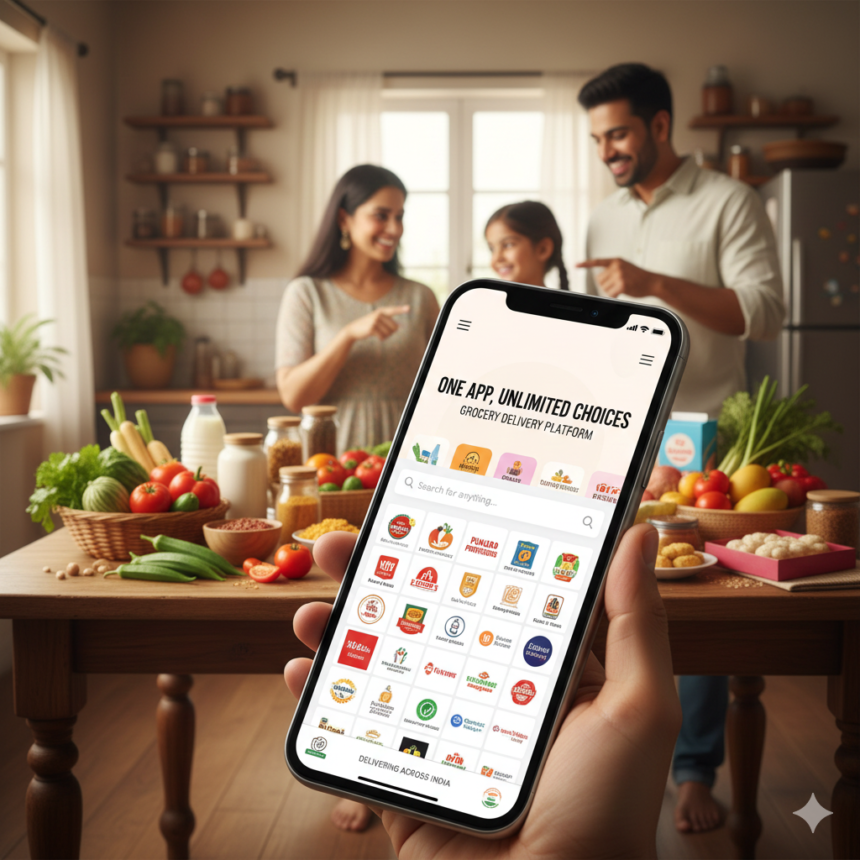
This roadmap outlines the complete journey of launching and scaling a multi-vendor online grocery marketplace—starting from idea validation to nationwide expansion. It covers every operational step including vendor onboarding, delivery partner recruitment, app development, customer acquisition, marketing execution, and long-term optimization. The plan is structured in practical phases so you know exactly what to build first, how to launch fast, how to grow sustainably, and how to convert your platform into a strong, trusted brand that operates independently of its vendors. This roadmap ensures you move from a simple startup idea to a scalable, profitable, automated marketplace.
- 🚀 FULL 24-MONTH ROADMAP FOR YOUR MULTI-VENDOR GROCERY DELIVERY PLATFORM
- 📍 1. Select First Locality (3–5 km radius)
- 🔎 2. On-ground Area Study
- 👥 3. Mini Customer Survey (150 responses)
- 🧭 Where to Find Vendors
- 💬 Vendor Pitch Script
- 📑 Vendor Onboarding Steps
- ✔ Vendor Documents to Collect
- 🚴 Where to Find Drivers
- 💬 Driver Pitch Script
- 🧾 Driver Onboarding Checklist
- 🏢 1. Apartments Strategy
- 🏬 2. PGs / Hostels Strategy
- 💻 3. WhatsApp Groups Strategy
- 🛍️ 4. Vendor Counter Promotion
- 📢 5. Flyers Distribution (Highly Effective)
- 🤳 6. Local Influencer Marketing
- 🔧 Daily Routine During Pilot
- 📦 Order Flow
- 📈 Pilot Goal
- 🏙️ 1. Expand Geography (Hyperlocal Expansion Model)
- 📱 2. Product Improvements
- 🚚 3. Delivery Optimization
- 📦 4. Vendor Growth Model
- 💰 5. Revenue Optimization
- 📢 6. Performance Marketing (Paid Ads)
- 👥 7. Hiring (Scale Stage)
- 🏬 1. Add Micro-Warehouses (Dark Stores)
- 🧠 2. AI + Data Optimization
- 🎯 3. Strong Brand Positioning
- 🚀 4. Expand to New Cities
- 🛒 5. Launch Private Label Products
- 🌎 6. Strategic Long-Term Options
- 🧭 Finding Your Niche (Market Differentiation) for Your Online Grocery Marketplace
- **✔ Slow Delivery in Tier 2 & Tier 3 Cities
- Niche Option A: “The Hyper-Local Grocery Marketplace”
- Niche Option B: “Multi-Vendor But Single-Brand Experience”
- Niche Option C: “Budget Grocery Delivery Platform”
- Niche Option D: “Immediate Essentials Delivery (20–60 minutes)”
- Niche Option E: “Farm-to-Home Fresh Produce Delivery”
- Common Pain Points of Grocery Buyers
- Major Competitors
- Your Positioning Strategy
- Example Niche Statement:
- Your strongest differentiators could be:
- 🔹 Hidden Vendors = One Brand Trust
- 🔹 Multi-Vendor = Zero Out-of-Stock
- 🔹 Smart Routing = Faster Delivery
- 🔹 Competitive Pricing
- 🔹 Quality Assurance
- 🔹 More Variety
- Examples:
- Perform:
- ⭐ PRODUCT SELECTION, RAW MATERIAL BUYING & QUALITY CONTROL (Beginner-Friendly Guide)
- The products include:
- ✔ Food items
- ✔ Household items
- ✔ Daily-use essentials
- ✔ Online Research
- Offline (Most Reliable & Low Cost):
- Why Offline Is More Preferable:
- Method A: Visit Local Market Areas
- Method B: Visit Daily Mandis at 3–6 AM (For Veggies & Fruits)
- Method C: Meet Brand Distributors
- A. For Packaged Products
- B. For Vegetables & Fruits
- C. For Grains & Pulses (Dal, Rice, Atta)
- D. For Oil & Ghee
- E. For Dairy Products
- Check:
- ✔ Step 1: Learn basics from YouTube
- ✔ Step 2: Ask Experts in Mandis
- ✔ Step 3: Buy Small Quantity & Test
- Vendor Requirements:
- Product Requirements:
- Build a 3-person system:
- Fake =
- ✅ Key Documents & Registrations You Need (and Why)
- FSSAI License / Registration
- Business Entity / Company Registration (Legal Structure + Tax Identity)
- Udyam (MSME) Registration (for small/micro business, optional but useful)
- GST Registration (if applicable)
- Vendor / Supplier Agreements & Documentation
- Delivery Partner / Logistics Agreements & Documentation
- Internal SOPs, Policies & Business Documentation
- 🔗 Where / How to Apply — Official Links & Portals
- ⚠️ Important Notes & Compliance Warnings
- 🎯 What You Should Do Now (Given Your Plan)
- 📦 INVENTORY & COST MANAGEMENT (Low-Investment Model)
- MODEL 1: Zero-Inventory Model (Best for ₹0–₹10,000 Budget)
- MODEL 2: Micro-Inventory Model (₹5,000–₹50,000 Budget)
- (A) Wholesale Markets (Offline – Lowest Cost)
- (B) Local Distributors / Wholesalers
- (C) Online B2B Platforms (Easy for Beginners)
- Why?
- A. Packed Items
- B. Grains & Pulses
- C. Fresh Vegetables & Fruits
- If unsure, do this:
- A. Use Micro-Shelving
- B. FIFO System
- C. Keep less than 10–15 items at beginning
- Total Average Minimum Cost = ₹4,000 – ₹10,000 ONLY
- Morning
- Afternoon
- Evening
- 1. Buy only after order (Zero-Investment Model)
- 2. Use vendor credit
- 3. Start with small units
- 4. Never buy perishable items in bulk
- TOTAL DAILY/WEEKLY COST = Approx ₹2,000–₹4,000
- 1. Shopify (Best for beginners)
- 2. Dukaan (Cheapest for India)
- 3. Instamojo (E-commerce builder + Payment)
- 1. Domain
- 2. Hosting
- 3. WordPress + WooCommerce (Free)
- 4. Plugins You Need
- Total Startup Cost (WordPress)
- Cost Breakdown
- 1. AppyPie
- 2. Simvoly / Builder.ai / Bubble
- If your budget is:
- Marketing & Brand Awareness — Low-Cost, Step-by-Step Plan (with costs & scalable, no-investment tactics)
- A — Apartment / RWA Activation (Highest ROI)
- B — Vendor Counter Promotion (Free / Minimal cost)
- C — WhatsApp Marketing (Free — high impact)
- D — Referral Program (Organic virality)
- E — Micro-Influencer & Community Creators (Low cost)
- F — Flyers & Flyering (Measured offline)
- G — Sampling / Free Trial Boxes (High conversion)
- H — Local Partnerships (Zero-to-Low Cost Growth)
- I — Social Media Organic Content (Free but time cost)
- J — Local PR / Community Media (Very Cheap)
- K — Paid Ads (Small, Measured)
- Step 1: Customer Raises an Issue
- Step 2: Support Verifies the Order
- Step 3: Identify Who Is Responsible
- Step 4: Decision – Refund or Replace
- Case 1: Grocery (Non-Returnable Items)
- Case 2: Packaged Products (Returnable Within 24 Hours)
- Case 3: Defective or Damaged Items
- Instant Refund (UPI)
- Standard Refund (Payment Gateway)
- Cash on Delivery (COD)
- 1. Delay Message
- 2. Missing Item
- 3. Damaged Product
- 4. Wrong Item
- Daily QC Tasks
- Weekly QC Tasks
- Total Starting Cost:
- 🛑 Major Difficulties You Will Face as a Founder — With Real Solutions
- ✅ Solution:
- ✅ Solution:
- ✅ Solution:
- ✅ Solution:
- ✅ Solution:
- ✅ Solution:
- ✅ Solution:
- ✅ Solution:
- ✅ Solution:
- ✅ Solution:
- ✅ Solution:
- ✅ Solution:
- ✅ Solution:
- ✅ Solution:
- ✅ Solution:
- ✅ Solution:
- Shipping & Logistics — Complete step-by-step guide (assume zero prior knowledge)
- Where to recruit
- What you require (documents)
- Onboarding steps (day-1)
- Sample rider pay structure (India realistic)
- (Why It Happens + How to Handle It Step-by-Step)
- Problem
- Solutions (Step by Step)
- Step 1: Don’t compete on price — compete on convenience
- Step 2: Sell niche products competitors ignore
- Step 3: Focus on basket value, not item price
- Step 4: Vendor-side negotiation
- Step 5: Use private-label strategy
- Problem
- Solutions
- Step 1: Highlight what makes you unique
- Step 2: Use psychological pricing
- Step 3: Use cashback instead of discounts
- Problem
- Solutions
- Step 1: Create a vendor agreement
- Step 2: Add 8–10% buffer margin
- Step 3: Maintain multiple suppliers for each category
- Problem
- Solutions
- (What will break when you grow — and how to fix it)
- Problem
- Solutions
- Problem
- Solutions
- Solution
- Solution
- Solution
- Solution
- Solution
- Solution
- Solution
- Solution
- 1️⃣ AngelList India
- 2️⃣ LetsVenture
- 3️⃣ Tyke Invest
- 4️⃣ Venture Catalysts
- 5️⃣ Indian Angel Network (IAN)
- 1️⃣ Startup India Seed Fund
- 2️⃣ SIDBI Fund of Funds
- 3️⃣ MSME Schemes
- 1️⃣ Grip Invest
- 2️⃣ Wefunder (US)
- 3️⃣ Republic.co (US)
- How to apply:
- Top Indian incubators:
- ✔ A pitch deck
- ✔ One-page summary
- ✔ Traction numbers
- ✔ Basic financial projection
- ✔ Business model explanation
- ✔ Customer acquisition cost (CAC)
- ✔ Pricing + revenue strategy
- Revenue Sources:
- Step 1: Create pitch deck (Completed above)
- Step 2: Upload to Google Drive
- Step 3: Create a 1-page summary
- Step 4: Build small traction in 1 locality
- Step 5: Approach investors through:
- Step 6: Message investors like this:
- 1. WhatsApp Community Launch (0 ₹)
- 2. Local Area Sticker Marketing (₹400–₹700)
- 3. Vendor Cross-Promotion (0 ₹)
- 4. Family/Society Demo Counters (₹300/day)
- 5. Social Media Organic Strategy (0 ₹)
- 1. Referral Program (0–₹200)
- 2. Partnership with Housing Societies (0–₹500)
- 3. SMS Retargeting (₹0.12/SMS)
- 4. Influencer Barter Deals (FREE)
- 1. Subscription Model Launch
- 2. Corporate & Office Tie-ups (FREE)
- 3. Google My Business Optimization (0 ₹)
- 1. “30-Minute Delivery Challenge”
- 2. “Sunday Mega Combo Boxes”
- 3. “Earn Groceries Free for 1 Month” Giveaway
- Sales Script (For Vendors):
- Customer Phone Script:
- Society Permission Script:
- 1. Government Funding
- 2. Startup Platforms
- 3. Accelerators
- 4. Investors You Can Actually Reach
- 🔴 1. Zepto
- 🔴 2. Blinkit
- 🔴 3. Swiggy Instamart
- 🔴 4. BigBasket
- 🔴 5. Local Kirana Stores With Their Apps
- 🔴 6. JioMart
- 1. High Delivery Charges
- 2. Hidden Commissions From Vendors (20%–28%)
- 3. Forced Branding (Vendor name is NOT shown)
- 4. Limited Fresh Products
- 5. Extremely Costly Business Model
- 6. Focus Only on Metros
- 7. Poor Customer Support (BigBasket, JioMart)
- 1. Features Comparison
- 🔴 Competitor Path (Zepto/Blinkit Model)
- 🟢 Your Path (Hyperlocal Multi-Vendor Model)
- Your Step-by-Step Path:
- Step 1: Build Vendor Network (Month 1–2)
- Step 2: Build Customer Base (Month 1–3)
- Step 3: Improve Delivery System (Month 3–6)
- Step 4: Expand to More Areas (Month 6–12)
- Step 5: Add New Categories (Months 12–24)
- Step 6: Build Subscription Plan
- Vendor Commission Comparison Chart
- Delivery Time Comparison
- Cost Structure Comparison
- 1. Be the Vendor-Friendly App
- 2. Hyperlocal Model, Not Whole City
- 3. WhatsApp-Based Marketing
- 4. Build Personal Relationship with Customers
- 5. Target Markets They Ignore
- 6. Offer More Products
🚀 FULL 24-MONTH ROADMAP FOR YOUR MULTI-VENDOR GROCERY DELIVERY PLATFORM
⭐ PHASE 1 — MARKET STUDY & SETUP (Week 0–2)
📍 1. Select First Locality (3–5 km radius)
Checklist:
- Apartment density (at least 20 apartments)
- Nearby markets with 10–20 vendors
- Middle-income families
- Students + PGs
- Low delivery competition (check Blinkit/Zepto delivery times)
🔎 2. On-ground Area Study
Visit:
- Grocery clusters
- Fruit/veg markets
- Dairy booths
- Kirana stores inside apartments
- Weekly sabzi mandi
Note: stock variety, hygiene, staff behavior, packaging, peak hours.
👥 3. Mini Customer Survey (150 responses)
Where: Apartments, parks, WhatsApp groups.
Ask:
- Online habit
- Problems with Swiggy/Zepto
- Budget
- Favorite items
- What discount they want
- Delivery expectations
⭐ PHASE 2 — VENDOR ACQUISITION (Week 2–4)
🧭 Where to Find Vendors
- Local markets
- Apartment kirana shops
- Fruit/veg shops
- Dairy & bakery shops
- Flour mills
- Wholesale grocers
- Mandi stalls
- Organic stores
💬 Vendor Pitch Script
“Namaste bhaiya, we are building a grocery delivery app for ONLY this area.
Your shop name won’t be shown.
We bring customers → You pack items → We pick up → Weekly payout.
Zero setup cost. Interested?”
📑 Vendor Onboarding Steps
- Explain app model (name hidden)
- Collect 20–50 products
- Take product photos
- Add their shop on map
- Train vendor how to confirm orders
- Sign simple vendor agreement
- Set payout schedule (T+3 or T+7)
✔ Vendor Documents to Collect
- Shop owner name
- Phone number
- UPI / bank
- Address
- PAN
- Optional GST
- Product list & pricing
⭐ PHASE 3 — DELIVERY PARTNER ACQUISITION (Week 3–5)
🚴 Where to Find Drivers
Offline:
- Zomato/Swiggy hotspots
- Petrol pumps
- Near big restaurants
- Mechanic shops
- Outside PGs/colleges
- Tea stalls
Online:
- WhatsApp job groups
- Apna
- OLX jobs
- FB community job groups
- Telegram rider groups
💬 Driver Pitch Script
“Bhai part-time/full-time delivery chahiye?
Grocery delivery, short distance, light weight.
₹25–₹40 per delivery + weekly payout.”
🧾 Driver Onboarding Checklist
- Aadhaar
- License
- RC book
- Phone
- UPI
- Basic training (10 mins)
⭐ PHASE 4 — CUSTOMER ACQUISITION (Week 4–12)
🏢 1. Apartments Strategy
Most powerful channel.
Steps:
- Talk to security guard
- Put poster on notice board
- QR code in lifts
- Ask RWA to promote (small fee)
- Set small stall in evening 6–9pm
Flyer script:
“Local grocery delivery in 10–30 minutes.
First order FREE delivery. Scan to download.”
🏬 2. PGs / Hostels Strategy
- Posters near mess
- QR codes in corridors
- Refer-a-friend bonus (₹40 credit)
- Offer late-night delivery (high demand)
💻 3. WhatsApp Groups Strategy
Where to join:
- Local area groups
- School groups
- Apartment groups
- Buy/Sell groups
- Mothers groups
- PG groups
Message sample:
“New local grocery app for your locality only.
Faster delivery & cheaper than big apps.
Use code: FIRST50
Download: <link>”
Send 8–10am for maximum attention.
🛍️ 4. Vendor Counter Promotion
Vendors will tell customers:
“Madam, app se order karo, free delivery milega.”
Give them table QR codes.
📢 5. Flyers Distribution (Highly Effective)
Where:
- Outside apartments
- Near veg markets
- Metro/bus stop
- College gate
- Tea stalls
- Dairy shops
Flyer must have only:
✔ QR code
✔ 1 strong offer
✔ Delivery time
✔ No clutter
🤳 6. Local Influencer Marketing
Find 5k–20k follower influencers.
Offer: free grocery hamper + ₹1,000 reel charge.
Message sample:
“Hi, can we send you a free grocery box for an unboxing reel? We launched a local delivery app.”
⭐ PHASE 5 — PILOT OPERATIONS (Week 5–10)
🔧 Daily Routine During Pilot
- Check orders in real-time
- Call vendor for delays
- Call driver for pickups
- Monitor customer complaints
- Solve out-of-stock issues
- Update product prices
- Daily payouts
- App crash/bug monitoring
- Keep vendors motivated
📦 Order Flow
Customer → Vendor → Driver → Customer.
📈 Pilot Goal
- 500–1000 orders
- < 10% issues
- 90% on-time delivery
⭐ PHASE 6 — SCALE (Months 4–12)
Now your operations are working; time to grow.
🏙️ 1. Expand Geography (Hyperlocal Expansion Model)
Expand locality-by-locality.
Every new zone requires:
- 10–20 vendors
- 5–10 riders
- 1 operations supervisor
- Apartment partnerships
- Initial flyers (1 week)
Expansion timeline:
- Month 4–6 → 2nd zone
- Month 6–9 → 3rd & 4th zones
- Month 9–12 → 5–7 zones
📱 2. Product Improvements
Add features:
- Scheduled delivery
- Order repeat button
- Smart cart suggestions
- Real-time inventory
- Automatic refunds
- Vendor performance score
- Promo engine
- Subscription plans (milk, eggs)
🚚 3. Delivery Optimization
- Introduce batch deliveries
- Introduce “rider pooling”
- Add 3PL partners (Shadowfax, Porter, Dunzo)
- Reduce delivery radius to 1.5–2 km for speed
- Create rider incentives for peak hours
- Add route optimization tool
📦 4. Vendor Growth Model
Create vendor tiers:
- Bronze → New vendors
- Silver → High ratings
- Gold → Priority placement
Benefits for vendors:
- Analytics dashboard
- Sales trends
- Stock recommendations
- Faster payouts
- Higher visibility
💰 5. Revenue Optimization
Start earning from:
- Commissions (5–20%)
- Delivery fees
- Subscription (Prime plan)
- Ad placements for vendors
- Convenience charges
- Cart promotion fees
- Platform fees for COD
📢 6. Performance Marketing (Paid Ads)
- Facebook lead-gen ads
- Google “near me” ads
- YouTube short ads
- App install ads
- Retargeting ads
- Festive campaign ads
👥 7. Hiring (Scale Stage)
- Operations Manager (zone)
- Vendor Success Manager
- Delivery Lead
- Customer Support Team
- Product Manager
- QA Tester
- Marketing Executive
- Data Analyst
⭐ PHASE 7 — OPTIMIZATION & EXPANSION (12–24 months)
This is for becoming a strong city-level player.
🏬 1. Add Micro-Warehouses (Dark Stores)
Purpose:
- Keep fast-moving SKUs
- 10–15 min delivery guarantee
- Better margins
- Zero vendor dependency
Start with 1 dark store in each zone after order volume > 500 orders/day.
🧠 2. AI + Data Optimization
Add advanced systems:
- Demand forecasting
- Stock prediction
- Dynamic pricing
- Customer behavior clustering
- Vendor quality score automation
- Driver heat-maps
🎯 3. Strong Brand Positioning
Launch branding:
- Hoardings in busy areas
- Auto rickshaw banners
- Apartment festivals
- Festive grocery hampers
- Corporate tie-ups
- “Your Local Grocery Partner” tagline
🚀 4. Expand to New Cities
Requirements before new city:
- Profitability in 1 zone
- Playbook ready
- Vendor onboarding manual
- Driver manual
- SOP handbook
- Delivery flow system
Cities to expand:
- Tier-2 cities first (less competition)
- Pick 2 zones per city
- Partner with local delivery fleets
🛒 5. Launch Private Label Products
High margin items:
- Rice
- Pulses
- Masalas
- Oils
- Cleaning supplies
- Snacks
- Fresh-cut vegetables
Brand example:
“FreshLane Essentials” or “DailyChef Essentials”
🌎 6. Strategic Long-Term Options
- Merge with bigger players (acquisition)
- Raise VC funding
- Become B2B supplier to local shops
- Create all-state grocery network
- Add home services later (laundry, gas, water)
⭐ FINAL SUMMARY — 24-MONTH EXECUTION LIFECYCLE
| Phase | Timeline | What You Achieve |
|---|---|---|
| Market Study | 0–2 weeks | Know demand, know area |
| Vendor + Driver Acquisition | 2–5 weeks | Build supply & logistics |
| Pilot | 5–10 weeks | Test model, fix bugs |
| Customer Acquisition | Month 1–3 | Get 2,000–5,000 downloads |
| Scale | Months 4–12 | Expand to 5–7 zones |
| Optimization | 12–18 months | Automation, systems |
| Expansion | 18–24 months | Dark stores + new cities |
| Maturity | 24+ months | Profitability + acquisition ready |
🧭 Finding Your Niche (Market Differentiation) for Your Online Grocery Marketplace
To succeed in India’s crowded online grocery market, your platform must have a clear identity, unique offerings, and strong differentiation. Here is a detailed breakdown of how to find your niche and stand out among players like Blinkit, Zepto, BigBasket, Swiggy Instamart, and local grocery apps.
1️⃣ Identify Gaps in the Current Market
**✔ Slow Delivery in Tier 2 & Tier 3 Cities
✔ Limited Availability of Local & Hyper-Local Stores
✔ No Platform Exclusively Supporting Small Vendors
✔ High Delivery Prices for Basic Groceries
✔ Poor Product Variety from Single-Store Platforms
✔ Lack of Trust in New Grocery Apps**
These gaps help you shape your niche.
2️⃣ Define Your Unique Niche (Choose 1–3 Focus Areas)
Below are the strongest niche options specifically suited for your business model:
Niche Option A: “The Hyper-Local Grocery Marketplace”
Target: Cities with 1–25 lakh population
USP: Multiple nearby vendors → faster delivery & fresh items
Why it works:
No major competitor has deep penetration here.
Niche Option B: “Multi-Vendor But Single-Brand Experience”
Target: Customers who want variety but trust one brand
USP: Vendors remain hidden → consistent buying experience
Why it works:
Competitors show store names; you maintain brand purity.
Niche Option C: “Budget Grocery Delivery Platform”
Target: Students, middle-class families
USP:
- ₹0–20 delivery fee
- Lowest price with multi-vendor comparison
- Daily discounts & membership savings
Niche Option D: “Immediate Essentials Delivery (20–60 minutes)”
Target: Working professionals
USP:
- Quick delivery without dark stores
- 5–10 live vendors per locality
- Real-time vendor availability
Niche Option E: “Farm-to-Home Fresh Produce Delivery”
Target: Health-conscious customers
USP:
- Daily fresh vegetables
- Tie up with farmers & local mandis
- Quality guarantee + refund policy
3️⃣ Understand Customer Problems (Pain-Points Study)
Common Pain Points of Grocery Buyers
- App shows “item unavailable” on many products
- Delivery takes too long
- Prices are unpredictable
- Limited stores → limited variety
- Wrong or damaged items delivered
- Driver fees are too high
- Fake discounts
Your niche should solve at least 3–4 of these pain points.
4️⃣ Study Competition & Position Yourself
Major Competitors
- Zepto
- Blinkit
- Swiggy Instamart
- BigBasket
- Local store apps
Your Positioning Strategy
| Competitor | Their Weakness | Your Opportunity |
|---|---|---|
| Blinkit | Very high delivery charges | Offer ₹10–20 delivery |
| Swiggy Instamart | Dark store limited inventory | Multi-vendor = huge stock |
| Zepto | Limited to metros | Expand in Tier 2–3 first |
| Local store apps | No variety | Many vendors & fixed quality |
| Small startups | Weak brand | Your “single brand” marketplace |
5️⃣ Build a Niche Statement (Your Brand Identity)
A niche statement helps define your marketplace clearly.
Example Niche Statement:
“We are a hyper-local multi-vendor grocery marketplace that delivers from the best local stores under one trusted brand, ensuring fast delivery, lower prices, and maximum variety.”
Another version:
“A single-brand grocery platform powered by invisible vendors, offering premium customer experience with unbeatable convenience.”
6️⃣ Select Your Niche Differentiators (Core Advantages)
Your strongest differentiators could be:
🔹 Hidden Vendors = One Brand Trust
Customers trust you → not random stores.
🔹 Multi-Vendor = Zero Out-of-Stock
Product always available.
🔹 Smart Routing = Faster Delivery
Closest vendor assigned automatically.
🔹 Competitive Pricing
Vendor competition keeps prices low.
🔹 Quality Assurance
Platform checks vendors → best quality items.
🔹 More Variety
One store cannot match 10 stores together.
7️⃣ Micro-Niche Creation (Go Even More Specific)
Micro-niches help you scale fast in early stages.
Examples:
- “Fresh fruits & vegetables delivery under 1 hour”
- “Grocery & household essentials under ₹49 delivery fee”
- “Students’ midnight essentials delivery”
- “Ladies’ monthly essentials pack delivery”
- “Apartment & society grocery partner”
These micro-niches attract targeted users quickly.
8️⃣ Validate Your Niche (Small Market Test)
Perform:
✔ 1-week local survey
✔ 2-week pilot with 10 vendors
✔ Small paid ads (₹300–₹500/day)
✔ WhatsApp promotions in societies
✔ Google Forms for feedback
Track:
- Most ordered items
- Delivery time feedback
- Price sensitivity
- App usability
- Repeat customer behavior
9️⃣ Lock Your Final Niche Positioning
After feedback, finalize your niche by selecting:
- Target customer type
- Top 3–5 product categories to focus
- Brand personality (fast, affordable, premium, etc.)
- Key value propositions
- Unique delivery or pricing advantage
This becomes the foundation for your marketing, app design, and operations.
🔟 Create the Niche Identity in the App
Inside the app:
- Highlight your strongest differentiator (e.g., “Fast delivery from multiple stores”)
- Show curated categories
- Create unique product bundles
- Set up niche-specific homepage sections
- Promote your micro-niche offerings on banners
⭐ PRODUCT SELECTION, RAW MATERIAL BUYING & QUALITY CONTROL (Beginner-Friendly Guide)
1️⃣ STEP 1: First Understand What Products You Actually Need to Sell
Since you are a multi-vendor grocery marketplace, you don’t manufacture products—
you choose which products to allow vendors to sell.
So, your “raw material buying” = selecting vendors who have the best-quality products.
The products include:
✔ Food items
- Vegetables
- Fruits
- Rice, Dal, Atta
- Oils, Ghee
- Packaged foods (biscuits, chips, noodles)
- Dairy (milk, paneer, curd)
✔ Household items
- Cleaning supplies
- Bath & body
- Kitchen supplies
- Baby care
✔ Daily-use essentials
- Bread, eggs
- Ready-to-eat items
- Snacks
Your job is not to produce.
Your job is to ensure the products sold on your app meet quality standards.
2️⃣ STEP 2: How to Identify “What to Sell” (Best-Selling Product Selection)
If you don’t know anything about grocery products, start from:
✔ Online Research
- Check Blinkit
- Check Zepto
- Check BigBasket
- Study their popular categories
- Note: “Frequently Bought Items”
These give you top 200 products that people buy every day.
3️⃣ STEP 3: Where to Find Vendors (Your Real Raw Material Source)
Offline (Most Reliable & Low Cost):
✔ Local wholesalers
✔ Local Mandis
✔ Supermarket suppliers
✔ FMCG distributors
✔ Farmer suppliers (for veggies/fruits)
✔ Dairy farms / milk distributors
Why Offline Is More Preferable:
- Cheaper prices
- You can see the product quality in hand
- No packaging damage
- Trust-building is easier
- Faster restock
4️⃣ STEP 4: How to Find Vendors (Beginner-Friendly Process)
Method A: Visit Local Market Areas
Every city has:
- A big wholesale mandi
- A kirana wholesale store cluster
- FMCG distributor lanes
- Fruit & vegetable mandis early morning
Ask for:
- Grocery wholesalers
- Distributors for top brands (Tata, Nestle, Britannia)
- Packaging goods wholesalers
Talk to 10–20 shops → compare price list.
Method B: Visit Daily Mandis at 3–6 AM (For Veggies & Fruits)
There you get:
- Fresh produce
- Lowest prices
- Direct from farmers
- Bulk options
You can also partner with:
- Local sabzi mandi vendors
- Farmers who supply daily
Method C: Meet Brand Distributors
Every company has an official distributor in every city:
Examples:
- Britannia distributor
- Nestle distributor
- HUL distributor
You get:
- Original price list
- Best purchase rates
- Genuine goods
5️⃣ STEP 5: How to Identify Product Quality (Even if You Have 0 Knowledge)
Here is a beginner-friendly quality-check method:
A. For Packaged Products
Check:
✔ Expiry date
✔ Manufacturing date
✔ Packaging damage
✔ Proper sealing
✔ MRP label
✔ Batch number / lot number
✔ FSSAI number
If packaging looks old, torn, faded → reject.
B. For Vegetables & Fruits
Check:
✔ Freshness (colour, smell)
✔ Spots, bruises
✔ Hard/soft texture
✔ Water content
✔ Size uniformity
✔ Leaves freshness (for greens)
If you don’t know… compare 3 vendors side-by-side.
Best quality stands out visually.
C. For Grains & Pulses (Dal, Rice, Atta)
Check:
✔ Cleanliness
✔ No stones, dust
✔ No insect smell
✔ Colour consistency
✔ Moisture (should be low, not sticky)
Do a hand-test:
- Rub grains between fingers
- If powdery → old
- If too glossy → chemicals used
- If sticky → moisture present
D. For Oil & Ghee
Check:
✔ Brand reputation
✔ Expiry date
✔ Sealing
✔ Consistency (thickness)
For unbranded oil:
✔ Check smell (no foul smell)
✔ Colour should be natural, not too bright
E. For Dairy Products
Check:
✔ Smell test
✔ Expiry date
✔ Colour (white/yellowish for paneer)
✔ Texture (paneer should not crumble too easily)
✔ Cool temperature storage
6️⃣ STEP 6: How to Understand Products You Don’t Know
✔ Step 1: Learn basics from YouTube
Search:
- “How to check good vegetables”
- “How to identify pure dal”
- “Grocery buying guide”
10–15 videos = enough basic knowledge.
✔ Step 2: Ask Experts in Mandis
Local sellers know more than anyone.
Ask questions:
- How to check freshness?
- How long will it last?
- What’s the best season?
They explain everything practically.
✔ Step 3: Buy Small Quantity & Test
Before onboarding a vendor:
- Buy ₹1,000 worth of items
- Check quality
- Compare with another vendor
7️⃣ STEP 7: Build a “Vendor Quality Checklist” (Must-Have)
Create your own Quality Checklist:
Vendor Requirements:
✔ GST / Shop license
✔ Clean storage area
✔ Freshness guarantee
✔ Price list transparency
✔ Replacement/refund policy
✔ Regular product availability
Product Requirements:
✔ Expiry checked
✔ Freshness maintained
✔ No duplicate/fake brands
✔ Hygienic storage
✔ Cold items kept in cooler
8️⃣ STEP 8: Create a “Quality Control Team” (Small Team)
Even with 0 knowledge, you can build a system:
Build a 3-person system:
- Quality Inspector (visits vendors weekly)
- Packager (checks expiry, sealing)
- Delivery partner feedback collector
Every delivery partner must report:
- Spoiled product
- Damaged product
- Wrong item
This helps catch low-quality vendors.
9️⃣ STEP 9: Choose Which Products to Sell First (High Rotation & Low Risk)
Start with:
✔ Dal
✔ Rice
✔ Atta
✔ Oil
✔ Milk
✔ Bread
✔ Eggs
✔ Vegetables
✔ Fruits
✔ Chips
✔ Biscuits
✔ Maggie
✔ Sugar & Salt
These products:
- Sell daily
- Low chance of loss
- Easy to quality-check
- High repeat orders
🔟 STEP 10: Slowly Add More Products After 2 Months
Add:
✔ Cleaning items
✔ Grooming items
✔ Baby products
✔ Kitchen supplies
✔ Frozen foods
Only after building customer trust.
🔟 BONUS: How to Identify Fake Products Easily (Important)
Fake =
- Low MRP printed
- Spelling mistakes on packet
- Packaging colour slightly different
- No batch number
- No FSSAI
- Seal irregular
Reject immediately.
✅ Key Documents & Registrations You Need (and Why)
FSSAI License / Registration
- Why needed: Because you’re dealing with food items (groceries, perishables, edible items), you must comply with food safety / regulation laws. Even if you are acting as a marketplace (aggregator + delivery), you need to register as “food business operator (FBO)” under FSSAI rules for e-commerce / food sale via online platforms. FSSAI+2ClearTax+2
- Which variants:
- Basic registration — for very small scale (low turnover / small operations) ClearTax+1
- State-level license — mid-size operations / state-level food business FSSAI India+1
- Central license — large scale / multi-state / high turnover / includes imports/exports or big operations. LegalDocs+2Kanakkupillai+2
- Documents required (typical):
- ID proof of owner / responsible person (Aadhaar, passport, voter ID, etc.) FSSAI India+2Kanakkupillai+2
- Proof of business premises (rental agreement / utility bills / lease agreement / address proof) Compliance Calendar LLP+2mystartupsolution.in+2
- Business registration documents (company incorporation certificate, partnership deed, etc.) if not sole proprietor. Kanakkupillai+1
- List of food items / categories you will sell. StartupsFiling+1
- If larger scale / processing / storage / warehousing: layout of premises / water test / equipment details / safety plan / FSMS (Food Safety Management System). FSSAI India+2mystartupsolution.in+2
- Where to apply: Through the national portal for food-license registration — FoSCoS Portal (the official portal for FSSAI registration/ license). foscos.fssai.gov.in+1
- Details & guidelines: Official FSSAI website explains all categories, license types, and procedures. FSSAI India+1
Business Entity / Company Registration (Legal Structure + Tax Identity)
Depending on how you want to structure your business: sole proprietorship, partnership, LLP, private limited, etc. This gives you a legal entity, helps with contracts, vendor agreements, taxation, etc.
- Why: Banks, vendors, formal agreements, GST registration, and others expect a registered business entity.
- Documents/Proof for registration: PAN, Aadhaar, address proof, incorporation/partnership deed or certificate as applicable.
- This is a general corporate registration — you apply under respective law (depends on state/entity type).
- If you are small, you could remain a sole proprietor or partnership originally; as you scale you may convert to LLP or Pvt Ltd.
(Note: the exact procedure and documents depend on which entity type you choose — sole proprietorship, partnership, LLP, etc.)
Udyam (MSME) Registration (for small/micro business, optional but useful)
- Why useful: If your business remains small or mid-sized, registering under MSME (Udyam) helps in government compliance, potential benefits, easier recognition among vendors and suppliers, easier financing/loans, etc.
- Documents required: Typically PAN, Aadhaar, address proof, business details. applyfssaifoodlicence.godaddysites.com+1
- When to do it: Preferably early, even if small, especially if handling inventory, suppliers, or aiming to scale.
GST Registration (if applicable)
- Why: If your turnover crosses threshold limits (or if you deal across states), you need to register under GST to comply with Indian tax laws.
- Documents typically required: PAN card, address proof of business, bank details, business structure documents, identity proofs.
- Having GST helps in formal invoicing, vendor procurement, compliance, and growth.
- As your grocery marketplace grows — especially with many vendors and supply chains — GST registration becomes important for transparency and legality.
Vendor / Supplier Agreements & Documentation
Since your business is multi-vendor — you must formalize relationships with each vendor and supplier using written agreements. Key documents include:
- Vendor agreement (terms & conditions, commission, delivery responsibilities, quality/return policy, product listing rules, confidentiality, etc.)
- Vendor details: shop address, owner identity proof, GST/PAN (if applicable), bank / UPI details for payouts
- Product catalog & price list (with SKUs, product description, units, MRP/price)
- Inventory and stock agreement or policy (how often they’ll update stock, how to handle out-of-stock, perishable items)
- Packaging & hygiene compliance (especially for perishables) — for accountability
These documents help ensure quality, accountability, and smooth operations.
Delivery Partner / Logistics Agreements & Documentation
Since your platform uses delivery partners:
- Partner / rider contract (responsibilities, payment terms, delivery standards, behavior code)
- Driver ID/proof & vehicle documents (if you use bike/motorbike delivery)
- Proof of work eligibility (age, license)
- Insurance / liability clauses (especially for perishable or fragile items)
- Payment method & payout schedule documentation
This ensures your delivery mechanism is legally compliant and reduces risk.
Internal SOPs, Policies & Business Documentation
These are not “legal licenses,” but important for internal management and vendor/partner accountability:
- Standard Operating Procedures (SOP) for order processing, vendor onboarding, delivery, returns, quality check, customer support.
- Quality control checklists (for products, perishable items, vendor hygiene)
- Refund / replacement / complaint handling policy
- Data privacy & user data handling if storing user/customer data
- Terms of Service / Privacy Policy / User agreement (for app/website)
These documents build trust with customers and vendors and protect you legally.
🔗 Where / How to Apply — Official Links & Portals
| Requirement | Portal / Link / Website |
|---|---|
| FSSAI License / Registration (E-commerce / food business) | FoSCoS Portal — https://foscos.fssai.gov.in/ foscos.fssai.gov.in+1 |
| MSME / Udyam Registration | Udyam Registration Portal (search “Udyam registration” online) — ensures business recognized as MSME / small enterprise industries.mizoram.gov.in+1 |
| Company / Business Entity Registration (if Pvt Ltd / LLP) | Registrar of Companies (ROC) / respective state registrar (varies) — you can register through official MCA website or state commerce department |
| GST Registration | Official GST portal (gst.gov.in) — register when turnover limit or inter-state supply demands |
| Vendor / Delivery Partner Agreements | Prepare internally — word/PDF documents during vendor & partner onboarding |
| SOPs, Terms & Conditions, Privacy Policy | Prepare internally (or via legal counsel) to match business model, compliance, and operations |
⚠️ Important Notes & Compliance Warnings
- Even if you are just a “marketplace aggregator” — because you handle food items (groceries, perishables, processed food), you still fall under FSSAI / food-business regulation for e-commerce platforms. FSSAI+1
- For perishables, maintain proper storage/transport hygiene; quality complaints or unsafe food can cause legal trouble.
- If your turnover crosses the threshold (or you supply across multiple states), upgrade license accordingly (State → Central, GST compliance, formal entity registration).
- Maintain clear documentation for every vendor/delivery partner: avoid verbal agreements only.
- Refresh and renew licenses — FSSAI license validity and renewal requirement must be checked. MSME Ki Pathshala+1
🎯 What You Should Do Now (Given Your Plan)
Since you are at idea/early stage in a small city (like Supaul, Bihar):
- Register your business (sole proprietor or partnership) — simple and cost-effective.
- Immediately apply for FSSAI “E-commerce / food business” license via FoSCoS portal (basic or state license depending on expected scale).
- Keep PAN + Aadhaar + address proof + rental agreement (if using rented premises) ready.
- Draft a vendor agreement template (for all vendors you onboard).
- Draft a delivery-partner agreement template.
- Create internal SOPs (quality check, packaging, returns, deliveries).
- Later, when your turnover increases, register GST & consider formal company registration or MSME registration for better structure.
📦 INVENTORY & COST MANAGEMENT (Low-Investment Model)
For Multi-Vendor Grocery Marketplace (Without Big Warehouse)
✅ 1. Two Models You Can Choose From
Since you are low-budget and have little storage space, these two models work best:
MODEL 1: Zero-Inventory Model (Best for ₹0–₹10,000 Budget)
You don’t buy any stock.
Your vendors store all products.
You only show their products in your app.
How it works
- Customer orders on your app.
- You receive the order.
- You forward it to the vendor.
- Delivery partner picks it up.
- You earn a commission.
Why this is perfect for beginners
✔ ₹0 storage cost
✔ No risk of unsold inventory
✔ No need to check quality of every item (vendors already maintain)
✔ Scaling is very easy
MODEL 2: Micro-Inventory Model (₹5,000–₹50,000 Budget)
You keep only fast-moving products in small quantity like:
- Atta
- Oil
- Rice
- Sugar
- Basic veggies (onion, potato, tomato)
- Popular snacks
You keep these in one small room at home OR 100 sq ft rented room.
Why?
To ensure quick delivery within 10–20 minutes on urgent orders (express delivery).
✅ 2. WHERE & HOW TO BUY PRODUCTS AT LOW COST
Since you have little knowledge of product quality, follow these real Indian sourcing methods:
(A) Wholesale Markets (Offline – Lowest Cost)
Best and cheapest for beginners.
Examples (India-wide)
- Local APMC market (for vegetables, fruits, grains)
- Wholesale grocery market in your city
- Mandis (for atta, rice, oil)
- Distributor godowns
Why offline?
✔ Cheapest cost
✔ You can touch, smell, and check freshness
✔ You buy only what you need
✔ Build relationships → Better pricing later
Best for: staples, fresh groceries, packaged items
(B) Local Distributors / Wholesalers
These wholesalers sell branded products in bulk discounted rates, such as:
- Tata
- Aashirvaad
- Fortune
- Amul
- Haldiram
- Britannia
Why they are helpful:
✔ Delivery to your home
✔ 2–10% discount
✔ You can return damaged products
✔ No MOQ (minimum order quantity) in many cases
(C) Online B2B Platforms (Easy for Beginners)
Platforms:
- Udaan
- Jumbotail
- ElasticRun (if available)
- IndiaMART (for contacting wholesalers)
Why?
✔ Price comparison
✔ Delivered to your doorstep
✔ Easy return
✔ Good quality control
✅ 3. HOW TO CHECK PRODUCT QUALITY (Even if You Have 0 Knowledge)
A. Packed Items
Look for:
- FSSAI logo
- Manufacturing date
- Expiry date
- Packaging damage
- Brand authenticity (MRP vs wholesale price check)
Tip: If packaging is slightly puffy or leaking → reject immediately.
B. Grains & Pulses
Simple beginner checks:
| Product | How to check quality |
|---|---|
| Rice | Smell fresh, no dust, uniform size |
| Wheat/Atta | No insects, no lumps |
| Pulses | Check color consistency, no stones |
| Sugar/Salt | Should be dry, no clumps |
| Oil | Original sealed bottle only |
C. Fresh Vegetables & Fruits
You don’t need experience — use simple checks:
| Item | What to check |
|---|---|
| Onion | Hard, no squishy parts |
| Potato | No green patches |
| Tomato | Firm but not too soft |
| Mango | No black spots, smells good |
| Banana | Slightly yellow, not overly soft |
If unsure, do this:
Ask 2–3 local wholesale vendors the same question:
“Bhaiya, kaun sa quality sabse zyada bikta hai?”
They will guide you — they want repeat customers.
✅ 4. HOW TO MANAGE INVENTORY IN SMALL SPACE
A. Use Micro-Shelving
Buy shelves from a local hardware shop (₹800–₹1,200).
B. FIFO System
First In → First Out.
Old stock must sell before new stock.
C. Keep less than 10–15 items at beginning
Examples:
- Atta
- Oil
- Sugar
- Rice
- Tea
- Bread
- Eggs
- Onion
- Potato
- Tomato
These sell daily, no storage risk.
✅ 5. REAL-LIFE MINIMUM STARTING COST (MICRO INVENTORY)
| Item | Cost (Approx) |
|---|---|
| Shelf (2 units) | ₹1,500 |
| Initial 10 items stock | ₹3,000–₹8,000 |
| Packaging (bags, stickers) | ₹500 |
| Weighing machine | ₹700 |
| Cleaning supplies | ₹200 |
| Delivery bags (if needed) | ₹600 |
Total Average Minimum Cost = ₹4,000 – ₹10,000 ONLY
✅ 6. DAILY INVENTORY MANAGEMENT WORKFLOW (SIMPLE)
Morning
- Check all expiry items
- Refill fast-selling items
- Verify fresh vegetables
- Update stock in your app
Afternoon
- Buy only what is needed (small batches)
- Record purchase price (important for margin)
Evening
- Check stock left
- Update reorder list
- Review daily sales to adjust purchasing
✅ 7. COST MANAGEMENT STRATEGIES (Low-Budget Founder Tips)
1. Buy only after order (Zero-Investment Model)
Vendor → Customer
No stock, no risk.
2. Use vendor credit
Most wholesalers offer:
- “Next-week payment”
- “Monthly billing”
3. Start with small units
Instead of 25kg rice, buy:
- 5kg or 10kg bags
It reduces storage and wastage.
4. Never buy perishable items in bulk
Vegetables, fruits, bread should be restocked daily.
📊 8. SAMPLE CHART – Micro Inventory Plan (Practical Example)
| Category | Daily Fresh | Weekly Buy | Stock Amount | Cost |
|---|---|---|---|---|
| Vegetables | Onion, Potato, Tomato | — | 5kg each | ₹300 |
| Staples | Atta, Rice, Sugar, Tea | Weekly | 2–5 units | ₹1,200 |
| Snacks | Biscuits, Namkeen | Weekly | 10–15 units | ₹500 |
| Dairy | Bread, Eggs | Daily | Small qty | ₹200 |
| Packaging | — | Monthly | 1 pack | ₹150 |
TOTAL DAILY/WEEKLY COST = Approx ₹2,000–₹4,000
✅ 1. REAL-LIFE WEBSITE & E-COMMERCE SETUP COST (INDIA)
There are 3 ways to build your website/app:
OPTION A — LOW BUDGET (No Developer Needed)
Use drag-and-drop platforms
1. Shopify (Best for beginners)
✔ Ready grocery themes
✔ Add vendors through apps
✔ Works without coding
Cost:
| Item | Price |
|---|---|
| Monthly plan | ₹1,499–₹2,999 |
| Domain | ₹600–₹900/year |
| Apps (multi vendor, delivery) | ₹500–₹3,000/month |
Total Monthly Cost: ₹2,500 – ₹6,000
2. Dukaan (Cheapest for India)
✔ 10–minute setup
✔ Very fast
✔ Good for small grocery startups
Cost:
| Item | Price |
|---|---|
| Annual plan | ₹6,000–₹12,000/year |
| Domain | ₹600–₹900/year |
Total Monthly Equivalent: ₹500–₹1,000
3. Instamojo (E-commerce builder + Payment)
✔ Great for simple stores
✔ No coding
✔ Smooth payments
Cost:
| Item | Price |
|---|---|
| Starter Plan | Free (limited) |
| Premium | ₹3,000–₹10,000/year |
OPTION B — MEDIUM BUDGET (WordPress + Plugins)
Best for people who want flexibility + low cost.
1. Domain
Buy from:
🔗 https://www.godaddy.com/en-in
🔗 https://www.namecheap.com/
🔗 https://in.godaddy.com/
Cost:
₹600–₹1,200/year
2. Hosting
Choose any from these:
- Hostinger India → https://www.hostinger.in
- BlueHost India → https://www.bluehost.in
- SiteGround → https://www.siteground.com
Cost (realistic):
₹1,999 – ₹5,999/year
3. WordPress + WooCommerce (Free)
✔ 100% free
✔ Perfect for grocery stores
✔ Multi-vendor support
4. Plugins You Need
| Plugin | Use | Cost |
|---|---|---|
| WooCommerce | Store system | Free |
| WCFM Vendor Marketplace | Multi vendor | Free–₹4,000 |
| Delivery Date & Slot | Time delivery | ₹1,000–₹3,000 |
| RazorPay | Payment | Free |
| SMS Alert / MSG91 | OTP | ₹500–₹1500/month |
| Security Plugin | Protection | Free–₹2,000/year |
Total Startup Cost (WordPress)
| Component | Annual Cost |
|---|---|
| Domain | ₹800 |
| Hosting | ₹3,000 |
| Plugins Optional | ₹3,000 |
| SMS | ₹500/month |
👉 Total 1st Year Cost: ₹7,000 – ₹12,000
OPTION C — FULL CUSTOM WEBSITE (Developer Needed)
Good if you want a high-end system like BigBasket, Blinkit, etc.
Cost Breakdown
| Item | Price (India Market Rate) |
|---|---|
| UI/UX Design | ₹10,000 – ₹40,000 |
| Frontend Development | ₹20,000 – ₹80,000 |
| Backend Development | ₹30,000 – ₹1,00,000 |
| Admin Panel | ₹20,000 – ₹50,000 |
| Testing | ₹10,000 – ₹20,000 |
| Total | ₹90,000 – ₹2,50,000 |
✅ 2. MOBILE APP DEVELOPMENT – REAL MARKET PRICES
OPTION A — No-Code App Builders (Cheapest)
Best for startups on low budget.
1. AppyPie
Cost: ₹2,000–₹6,000/month
2. Simvoly / Builder.ai / Bubble
🔗 https://www.builder.ai/
🔗 https://bubble.io/
Cost: ₹1,500–₹10,000/month
OPTION B — Convert Website Into App
Cheapest real method for grocery apps.
Platforms:
- AppMySite → https://www.appmysite.com/
- Web2App Converter Tools
Cost:
₹3,000 – ₹10,000 (one-time)
OPTION C — Custom App Development (Realistic India Price)
If you want a full MVP grocery app.
| Feature | Cost |
|---|---|
| Customer App (Android) | ₹50,000 – ₹1,20,000 |
| Delivery Boy App | ₹25,000 – ₹70,000 |
| Vendor App | ₹30,000 – ₹80,000 |
| Backend & API | ₹30,000 – ₹1,00,000 |
👉 Total App Cost: ₹1,50,000 – ₹3,50,000
(Real Indian developer pricing)
📊 3. COMPLETE COST CHART (COMPARISON)
| Setup Type | Website Cost | App Cost | Total Budget |
|---|---|---|---|
| Ultra Low Budget (Dukaan/Instamojo) | ₹500–₹1,000/month | ₹3,000–₹10,000 one-time | ₹7,000–₹15,000 |
| Beginner-Friendly (Shopify) | ₹2,500–₹6,000/month | ₹3,000–₹10,000 | ₹5,000–₹12,000+ |
| Medium Budget (WordPress) | ₹7,000–₹12,000/year | ₹3,000–₹10,000 | ₹10,000–₹20,000 |
| Custom Website Only | ₹90,000–₹2,50,000 | — | ₹1,00,000–₹2,50,000 |
| Full Custom App + Website | ₹1,00,000–₹2,50,000 | ₹1,50,000–₹3,50,000 | ₹2.5L – ₹6L |
📌 WHICH OPTION IS BEST FOR YOU?
If your budget is:
- ₹5,000–₹10,000: → WordPress + AppMySite
- ₹10,000–₹30,000: → Shopify + App Converter
- ₹1,00,000+ → Custom Website
- ₹2,50,000–₹6,00,000: → Full Grocery App Ecosystem
Marketing & Brand Awareness — Low-Cost, Step-by-Step Plan (with costs & scalable, no-investment tactics)
Below is a practical, founder-friendly marketing playbook for your hyperlocal multi-vendor grocery app. It’s focused on low cost or zero-cost tactics, step-by-step actions, exact messages/scripts, timing, and a simple cost table. Use this as your daily/weekly checklist and scale primarily by reinvesting small profits, partnerships, and automation.
1) Core principles (so your tactics actually work)
- Start hyperlocal — one or two apartment clusters / a 2–3 km zone.
- Focus on speed, trust, and convenience in messaging.
- Use measurable offers (coupon codes, QR scans) so you can track channel ROI.
- Prioritise retention (repeat customers) over one-time downloads — retention is cheaper.
- Build strong vendor partnerships — they become distribution channels and co-marketers.
2) Weekly rollout plan (first 8 weeks) — what to do and when
Week 0 (Prelaunch): Prepare materials — landing page, QR code, 2 flyers, vendor posters, referral system, WhatsApp broadcast template.
Week 1 (Launch): Apartment blitz + vendor counter promotion + WhatsApp + 1 micro-influencer.
Week 2–4: Sample boxes to 20 micro-influencers/residents, door-to-door flyers, drivers hand out cards, RWA partnerships.
Week 5–8: Referral push, small local events (stall at market), PR outreach to local news, start low-cost Facebook/Instagram ads retargeting installers.
Do daily 30–60 minute tasks: check dashboards, call top 10 customers, review complaints, update offers.
3) Channels, tactics, exact scripts & micro steps (high detail)
A — Apartment / RWA Activation (Highest ROI)
Why: Concentrated users, easy trust.
Steps:
- Meet security / RWA president. Offer a ₹500–₹1,500 partnership fee or free grocery day for residents for a pilot (or revenue share of referral codes).
- Put poster on noticeboard + QR in lift + distribute 1-pager in mailboxes.
- Setup a weekend stall at society entry 5–8pm for demos & downloads.
Script to RWA:
“Hi, I’m [Name] from [App]. We launched in your society. We can give residents a 10 days free delivery code and run a demo day. Can we place a poster and run a free sample day this Saturday?”
Cost:
- Posters/print: ₹300–₹800 per society
- Sample day items: ₹2,000 (optional)
- RWA small fee: ₹0–₹1,500 (negotiate)
Metric: Installs via QR (use unique code per society).
B — Vendor Counter Promotion (Free / Minimal cost)
Why: Vendors are walk-in channels.
Steps:
- Give each vendor a printed counter card (QR + code) and sticker “Order on [App]”.
- Offer vendor incentive: ₹10 credit for every 5 customer referrals they generate.
- Train vendors to say: “Madam, order from our app and get free delivery today.”
Script for vendor:
“Sir, if you tell customers to scan this QR and use code SOCIETY10, both get ₹40 credit. We’ll pay out weekly.”
Cost:
- 50 cards + stickers: ₹500
- Small incentive pool: ₹2,000 initial
Metric: Number of orders placed using vendor QR code.
C — WhatsApp Marketing (Free — high impact)
Why: High open rates, immediate installs.
Steps:
- Create short message + image + QR link.
- Use vendor/driver to collect numbers (opt-in!).
- Send to local groups (APARTMENT, PG, Mothers group) in morning 8–10am.
Template:
“Hi! New local grocery app in [Locality] — first order ₹50 OFF. Fast delivery from local shops. Download: [link] Code: FIRST50”
Important: Respect group rules, always include opt-out and short messages.
Cost:
- SMS/WhatsApp gateway if large scale: ₹1,000–₹4,000/month (but start manually)
Metric: Clicks on link, installs from WhatsApp (use unique code).
D — Referral Program (Organic virality)
Why: Referrals are cheapest CAC.
Structure:
- Referrer gets ₹40 credit, referee gets ₹40 off first order.
- Add milestone referral bonuses (5 referrals → ₹300 voucher).
Implementation tips:
- Make credits usable only after one paid order to prevent abuse.
- Show progress in app (gamify).
Cost:
- Budget for credits (only charged when used). Example initial reserve ₹5,000.
Metric: Referral installs / LTV of referred users.
E — Micro-Influencer & Community Creators (Low cost)
Why: Local trust, targeted reach.
Steps:
- Identify 10 micro influencers in your locality (5k–30k followers).
- Offer free grocery box + ₹500–₹2,000 for a 30s reel/unboxing. Or revenue share for codes used.
Message to influencer:
“Hi [Name], we’ll send you a free ₹1,000 grocery box. Could you share a short unboxing + app code LOCAL50 for your followers?”
Cost:
- 5 influencers × ₹1,000 avg = ₹5,000 (can barter with free groceries)
Metric: Installs via influencer code.
F — Flyers & Flyering (Measured offline)
Why: Cheap and measurable if codes used.
Tactics:
- Door-to-door in target apartments (evenings 6–9pm) — hire 2 local students for ₹300/day each.
- Distribute at bus stops, market entries.
Flyer elements: QR, one offer line, brand promise.
Cost:
- Flyers: ₹1,000 for 2,000
- Field team: ₹600/day (2 people) for 3 days → ₹1,800
Metric: Uses of flyer code.
G — Sampling / Free Trial Boxes (High conversion)
Why: Experience converts new users.
Tactics:
- Create 50 sample grocery boxes worth ₹250 each with app card & code.
- Send to society committees, influencers, busy office clusters.
Cost:
- 50 boxes × ₹250 = ₹12,500 (high impact — use sparingly)
- Alternative: send 10 boxes to influencers + 40 to high-value prospects for ₹2,500–₹5,000
Metric: Conversion from samples.
H — Local Partnerships (Zero-to-Low Cost Growth)
Why: Scale without marketing spend.
Ideas:
- Tie up with local pharmacies, laundries, small restaurants for cross-promos.
- Partner with co-working spaces to offer employee discounts.
- Partner with local NGOs or schools — provide discounts for parents.
Execution:
- Give them promo codes to distribute; offer 10% commission on orders from their network.
Cost:
- Negotiable; typically 0–₹2,000 to set up materials.
Metric: Orders from partner codes.
I — Social Media Organic Content (Free but time cost)
Why: Builds brand and retention.
Content types:
- Short reels: “How we pack fresh veggies”
- Vendor stories: “Meet local vendor X”
- Daily deals + customer testimonials
- User-generated content (share customer photos)
Posting rhythm:
- 3 reels/week + 3 stories/day + pinned post with download link.
Cost:
- Time or ₹3,000/month for a part-time content creator.
Metric: Engagement, link clicks, installs.
J — Local PR / Community Media (Very Cheap)
Why: Credibility.
Tactics:
- Send press release to local news websites & community blogs about launch, special trial.
- Invite local journalist for a free sample.
Cost:
- DIY PR: ₹0
- Paid local PR outreach: ₹3,000–₹10,000
Metric: Traffic spike, installs after PR.
K — Paid Ads (Small, Measured)
When to use: after basic organic channels are working.
Channels:
- Facebook/Instagram local geotargeting ₹200–₹500/day
- Google App Campaigns ₹300–₹1,000/day
How to spend: Start ₹300/day for 7 days; optimize by CPI & installs.
Cost:
- Initial test: ₹2,100 (7 days × ₹300)
Metric: Cost per install (CPI), CAC.
4) Retention & CRM (cheaper than acquisition)
Retention reduces CAC and increases LTV.
Tactics:
- Push notifications: daily deals + re-order reminders.
- SMS reminders for abandoned carts.
- Loyalty program: point per ₹ spent → redeem at ₹200.
- Subscription packs: weekly veg box, milk subscription.
- Reactivation offers: ₹40 credit after 14 days of inactivity.
Costs:
- SMS / OTP gateway: ₹500–₹1,500/month
- Push/SMS per message cost small; focus on automation.
Metrics:
- Repeat rate (30/60 days), churn, CLTV.
5) Guerrilla & Unique Low-Cost Ideas (Highly actionable)
- “Driver Pop-ups” — drivers give a free ladoo / small sachet to first 50 deliveries and a leaflet that asks for a short review. Cost: ₹200.
- “Kirana Swap” — run a week where local kiranas offer a bundled “society essentials” at promotional price only via your app. Vendor funds the discount.
- “Midnight Essentials” — target students/late workers: promote 11pm–2am slot with free delivery for first month; flyer hostels. Cost: flyers + small promo.
- “Local Fest Booth” — at a society festival, set a free weigh-and-weigh station (weigh veggies) and hand out discount codes. Cost: ₹2,000.
- “Sticker on Rider Helmets” — cheap visibility in the locality. Cost: ₹200 for 20 stickers.
- “Referral Leaderboard” — monthly top referrer gets ₹2,000 grocery credit — creates social competition. Cost: prize pool funded by small % of revenue.
- “Vendor-Backed Cashback” — vendors fund a small cashback (₹10 per order) for visibility — you give them placement. Cost: vendor pays.
- “CSR + Goodwill” — donate 20 food boxes to a local shelter; PR + community goodwill. Cost: ₹4,000 (can be partly sponsored by vendors).
6) Scaling WITHOUT external investment (how to grow on a shoestring)
- Reinvest profits: allocate 30–40% of monthly profit into the highest ROI channel (usually referrals and vendor counter promos).
- Revenue share with vendors: vendors fund discounts or first-order promos in exchange for visibility.
- Partnership monetization: let local brands/shops sponsor a banner for ₹2,000/month.
- Driver referral engine: let drivers recruit customers (they get cash per successful install/order) — low upfront cost.
- Subscription / Prepaid credits: sell ₹500 prepaid credit with 5% bonus — immediate cash flow.
- Marketplace advertising: charge vendors small fees for promoted placement.
- Lean ops: reduce refund costs and failed delivery costs to improve cash flow.
- Affiliate & B2B: supply office cafeterias or small retailers with bulk package; net cash positive.
7) Sample Budget Table (0 → Low → Medium)
| Channel / Tactic | No-Invest Option | Low Cost Option | Medium Cost Option |
|---|---|---|---|
| RWA partnerships | Free (negotiated) | ₹500–₹1,500/society | ₹3,000 (sample day) |
| Vendor counters | Free (stickers) | ₹500 (50 cards) | ₹2,000 (posters+stand) |
| WhatsApp blasts | Free | ₹500 (manual hub) | ₹2,000 SMS gateway |
| Flyers | Free (DIY) | ₹1,000 (2k prints) | ₹3,000 (handout team) |
| Referral credits | Pay-per-use | Reserve ₹5,000 fund | ₹15,000 fund + leaderboard |
| Micro-influencers | Barter (free box) | ₹1,000 each | ₹3,000–₹5,000 each |
| Sampling boxes | N/A | ₹2,500 (20 boxes) | ₹12,500 (50 boxes) |
| Social content | DIY | ₹3,000/month creator | ₹10,000/month agency |
| Paid ads | N/A | ₹2,100 test | ₹15,000/month scaling |
| PR/local news | Free (DIY) | ₹3,000 outreach | ₹10,000 PR agency |
8) Metrics to track (dashboard basics)
- Installs per channel (use unique codes)
- CAC by channel (₹ spent / installs)
- Conversion rate (install → first order)
- Repeat rate (30 days)
- AOV (average order value)
- LTV (3-6 month)
- Referral conversion %
- Cost per active user
Measure weekly and double down on the top 2 channels.
9) Sample 90-day micro plan (concise)
Days 0–7: Setup (landing page, referral, 2 society posters, vendor counter cards).
Days 8–21: RWA demos + WhatsApp blasts + vendor counters + 1 micro-influencer (barter).
Days 22–45: Referral push + small flyer campaign + sample boxes to 20 residents.
Days 46–90: Launch paid retargeting (₹300/day), start subscription pilot, open 2nd society based on ROI.
Allocate initial low budget: ₹8,000–₹15,000 for first 45 days if possible; if zero budget, do RWA + vendor + WhatsApp + barter influencer + referral only.
10) Short scripts / creatives you can copy
Flyer headline:
“Local Grocery in 15–30 mins — Fresh from nearby shops. First order ₹50 off. Scan QR.”
WhatsApp (short):
“Fast local grocery in [Locality]. Use FIRST50 for ₹50 off. Download: [link]”
Vendor pitch:
“We’ll bring extra customers to your counter. Put this QR at your billing counter — for each 5 customers you refer we’ll credit ₹50 to your account.”
Driver recruitment blurb:
“Earn ₹300/day delivering groceries 4–6 hours. Weekly payouts. Call [number].”
Final recommendations / next steps
- Start with RWA + vendor counter + WhatsApp + referral (zero-to-low cost).
- Track installs by codes and measure CAC.
- Reinvest profits into the highest-ROI channel (likely referrals + vendor promos).
- Use vendor co-funded promotions to scale without external capital.
- Automate retention (push + SMS + subscription) early — retention beats new user acquisition.
🛍️ Customer Service & Returns – Complete Real-Life Blueprint (Step-by-Step)
This guide covers:
✔ customer support setup (low-cost)
✔ return policy
✔ refund process
✔ escalation system
✔ scripts
✔ tools
✔ real-life examples
✔ cost chart
1️⃣ Customer Service Setup – Low Budget, High Trust
A. Start With Only 2 Low-Cost Channels
1. WhatsApp Business API / WhatsApp Business App
- Cost: ₹0 – ₹999/month
- Easy to handle customer queries
- Quick replies
- Can automate messages
- Customers already trust it
2. In-App Chat (Free Tools)
- Free tools: Tawk.to, Freshdesk Free, Zoho Desk Free
- Cost: ₹0
- Use on website + app
- Helps track tickets + avoid losing chats
2️⃣ Customer Support Team Setup
Start with 1 Person → Expand Later
You only need:
- 1 support person (outsourced)
- Salary: ₹8,000 – ₹12,000/month
They will handle:
- Order status
- Delivery delays
- Missing item issues
- Refund approvals
- Vendor communication
Later (Month 6)
Add:
- 1 escalation manager
- 1 quality check associate
3️⃣ Step-by-Step Customer Support Workflow
Step 1: Customer Raises an Issue
Options:
✔ WhatsApp
✔ App Chat
✔ Phone Call
✔ Email
Customer selects issue type:
- Item missing
- Item damaged
- Wrong product delivered
- Order delayed
- Refund needed
- Replace item
Step 2: Support Verifies the Order
Support checks:
- Order ID
- Delivery partner logs
- Vendor’s packing photo (mandatory)
- Inventory record
Time taken: 1–5 minutes
Step 3: Identify Who Is Responsible
This is important.
Possible cases:
| Problem | Responsible | Action |
|---|---|---|
| Missing item | Vendor | Vendor refund/correct pricing |
| Damaged item | Delivery partner or vendor | Check packing photo |
| Wrong order | Picker or vendor | Replace instantly |
| Delay | Delivery partner | Apologize & offer coupon |
| Payment issue | App | Refund or manual resolve |
Step 4: Decision – Refund or Replace
A. Replace (Preferred)
- We send the missing/wrong item again
- Delivery partner takes back damaged item if needed
- Vendor gets notified
B. Refund
Refund within 24 hrs – 3 days depending on UPI/Gateway
4️⃣ Returns Workflow (Real-Life Version)
Case 1: Grocery (Non-Returnable Items)
For items like:
- Milk
- Fruits
- Vegetables
- Bread
- Frozen items
You CANNOT take returns.
Instead:
✔ “Instant Refund”
✔ “Free Replacement”
Why?
- Cost of taking return > cost of item
- Contamination possibility
- Perishable
Case 2: Packaged Products (Returnable Within 24 Hours)
Examples:
✔ Packaged food
✔ Household cleaning items
✔ Personal care items
Conditions:
- Not opened
- Sealed
- Received wrong/expired item
Return through delivery partner
Cost per reverse pickup: ₹6–₹12 (local grocery range)
Case 3: Defective or Damaged Items
Process:
- Customer sends photo/video
- Support checks vendor’s packing image
- Quick decision
- Replace/Refund instantly
5️⃣ Refund Policy Blueprint
Instant Refund (UPI)
- Time: 10 minutes – 6 hours
- Conditions:
✔ Vendor agrees
✔ Low-cost item (under ₹200)
✔ Non-returnable category
Standard Refund (Payment Gateway)
- Time: 2–5 working days
Cash on Delivery (COD)
- Refund to:
✔ UPI
✔ Wallet
6️⃣ Customer Service Scripts (Professional Templates)
1. Delay Message
“Hi 👋 Your order is slightly delayed due to high demand in your area. Our rider is on the way and will reach soon. Thank you for your patience!”
2. Missing Item
“We’re extremely sorry! We verify all orders with vendor packing photos. We found the missing item and have issued a free replacement. It will reach you shortly.”
3. Damaged Product
“Thank you for informing us. We have checked the delivery logs and packing image. Your refund is processed and will reflect shortly.”
4. Wrong Item
“Sorry for the inconvenience! The correct item is being arranged. Our delivery partner will deliver it soon and collect the wrong one.”
7️⃣ Quality Control in Customer Service
Daily QC Tasks
- Check 5% random delivery photos
- Monitor vendor packing quality
- Check rider handling
- Refund logs
Weekly QC Tasks
- Top 3 complaint types
- Vendor ranking list
- Rider performance score
- Complaint resolution time
8️⃣ Metrics (KPIs) to Track
| KPI | Good Target |
|---|---|
| First Response Time | < 3 minutes |
| Issue Resolution Time | < 30 minutes |
| Refund Processing | Same day |
| Customer Satisfaction Score | 4.3+ |
| Complaint Rate | < 2% |
| Repeat Purchase Rate | 40% |
9️⃣ Customer Service Cost Chart (Low Budget)
| Component | Monthly Cost | Notes |
|---|---|---|
| WhatsApp Business | ₹0 – ₹999 | Optional |
| In-app chat (Tawk.to) | ₹0 | Free |
| Support agent salary | ₹8,000 – ₹12,000 | Single agent |
| Phone SIM for calls | ₹299 | Jio/Airtel |
| Refund budget | ₹1,500 – ₹5,000 | Normal for grocery |
| QC manager (optional month 6+) | ₹8,000 | Part-time |
Total Starting Cost:
➡️ ₹8,500 – ₹14,000/month
🔟 Real-Life Example (How Small Startups Do It)
A small grocery delivery startup in Kolkata setup:
- 1 WhatsApp support person
- 1 part-time delivery partner
- Vendors pack the order
- App auto-sends delivery updates
- Refunds handled instantly (UPI)
Cost: ₹10,000/month → Customers love speed → Business scales word of mouth.
🛑 Major Difficulties You Will Face as a Founder — With Real Solutions
1️⃣ Difficulty: Finding Vendors Who Give Low Prices
Vendors will:
❌ not trust you because you are new
❌ give high prices
❌ delay packing
❌ provide inconsistent quality
✅ Solution:
- Start with local grocery shops (kirana) within 3–5 km
- Negotiate 10–12% margin
- Show them competitor apps for trust
- Offer incentives:
✔ daily payouts
✔ free vendor onboarding
✔ zero commission for 1 week
Pro tip:
Ask every vendor for packing photos before dispatch → reduces complaints by 70%.
2️⃣ Difficulty: Delivery Partner Shortage
Delivery boys often:
❌ don’t show up
❌ cancel orders
❌ demand extra money
❌ delay deliveries
✅ Solution:
Use a hybrid model:
- 1 in-house rider (paid ₹8k–₹12k)
- Extra riders through:
✔ Shadowfax
✔ Dunzo / Porter
✔ Pickrr
✔ Loadshare
This reduces dependency and ensures 99% availability.
3️⃣ Difficulty: Order Delays
Because of:
❌ traffic
❌ vendor packing delay
❌ wrong inventory shown
❌ rider shortage
✅ Solution:
- Keep Buffer Time: display 45–60 minutes on the app
- Have a “Quick Delivery” vendor nearby just for essentials
- Pre-scan vendor stock each morning
- Maintain 2-hour delivery promise window
4️⃣ Difficulty: Customer Complaints
Customers may complain about:
❌ missing items
❌ damaged items
❌ wrong product
❌ delay
❌ payment stuck
✅ Solution:
- Always collect vendor packing photos
- Refund instantly on UPI
- Keep auto-generated messages ready
- Setup WhatsApp quick replies
- Track daily complaints → fire poor vendors in 7 days
5️⃣ Difficulty: Returns & Refund Losses
Some customers trick the system:
❌ fake photos
❌ claim missing items
❌ ask refunds repeatedly
✅ Solution:
- Track abusive customers
- Limit refunds per user
- Keep delivery partner delivery-photo rule
- Ask for video proof in suspicious cases
6️⃣ Difficulty: App/Website Technical Problems
Possible risks:
❌ app crashes
❌ payment failure
❌ slow speed
❌ server down
✅ Solution:
- Use stable platforms:
✔ Shopify + Grocery theme
✔ Woocommerce + Flutter app
✔ React Native developers - Regular backup
- Use Cloudflare for uptime
- Fix issues within 24 hours
7️⃣ Difficulty: Low App Downloads Initially
Because you are new, customers don’t trust you.
✅ Solution:
Use zero-cost marketing:
- WhatsApp community groups
- Free sampling in local areas
- Referral bonuses
- Posters near kirana shops
- Free delivery for first week
- Social media reels
8️⃣ Difficulty: High Marketing Cost
You may think: “Facebook ads are expensive.”
✅ Solution:
Use hyperlocal marketing, not nationwide ads.
Marketing channels with ₹0–₹200 cost:
✔ WhatsApp Status advertising
✔ Circulars to 500 flats
✔ Society tie-ups
✔ Promo code distribution
✔ Banner outside societies
✔ Local influencers (₹500 reels)
9️⃣ Difficulty: Inventory Mismanagement
Common issues:
❌ showing items in stock that vendors don’t have
❌ delays because vendor didn’t pack
❌ wrong price updated
✅ Solution:
- Ask vendors for daily inventory update
- Maintain parallel Google Sheet for master stock
- Show only fast-moving items
- Use barcode scanning for vendors
🔟 Difficulty: Cash Flow Issues
You may face:
❌ delayed vendor payments
❌ low cash in hand
❌ refund pressure
❌ daily payout expectation
✅ Solution:
- Keep minimum ₹20,000 float for refunds + payouts
- Pay vendors every 3–5 days
- Maintain clear commissions
- Track every rupee with Zoho Books / Vyapar
1️⃣1️⃣ Difficulty: Competing With Big Players (BigBasket, Blinkit, Zepto)
People ask:
“Why should I buy from you?”
✅ Solution:
You win by:
- Hyperlocal presence
- Fresh & curated products
- Faster than 10-minute apps
- Local prices (cheaper than big apps)
- No minimum order
- Cash on delivery
- More variety from multiple vendors
1️⃣2️⃣ Difficulty: Fraud Vendors
Vendors may:
❌ send expired goods
❌ send less quantity
❌ not follow packaging process
✅ Solution:
mandatory rules:
- Vendor packing video/photo
- Daily QC (Quality Check)
- Vendor penalty system
- Fire low-performing vendors
1️⃣3️⃣ Difficulty: Delivery Area Expansion
When you expand too fast:
❌ riders won’t cover far points
❌ delay increases
❌ fuel cost goes up
✅ Solution:
- Expand 3–5 km circle only
- Add small delivery hubs
- Partner with nearby stores
- Use “Zone-based delivery” system
1️⃣4️⃣ Difficulty: Revenue Not Coming in Early
Because startup stage is slow.
✅ Solution:
- Start with break-even strategy
- Keep margins low initially
- Make profits from:
✔ delivery charges
✔ vendor commissions
✔ surge pricing
✔ banner ads inside app
✔ wholesaler tie-ups
1️⃣5️⃣ Difficulty: Trust Building
Customers always ask:
“Is this app genuine?”
✅ Solution:
- 24/7 WhatsApp support
- Fast customer service
- No questions asked refunds
- Proper packaging
- Deliver before promised time
- Customer feedback follow-ups
1️⃣6️⃣ Difficulty: Scaling Without Money
No investor will give money in the beginning.
✅ Solution:
Scale like this:
- Start in 1 area
- Become monopoly in that area
- Use profits to expand to next area
- Repeat
- Create strong SOPs → easy to replicate
This is how Blinkit, Zepto, Dunzo learned initially.
✔️ Final Summary
| Difficulty | Real Solution |
|---|---|
| Vendor issues | Strong negotiation + QC |
| Delivery partner shortage | Hybrid delivery model |
| Delays | Buffer time + zone-wise delivery |
| Complaints | Packing photos + instant refund |
| Returns fraud | Refund limits + proof |
| Tech issues | Stable platform + backups |
| Low downloads | Hyperlocal marketing |
| Inventory problems | Daily stock updating |
| Cash flow | Vendor payout cycle |
| Competition | Hyperlocal + faster |
| Trust | Support + fast delivery |
| Scaling | Area-by-area expansion |
Shipping & Logistics — Complete step-by-step guide (assume zero prior knowledge)
1. Delivery models — choose one to start
Pick one model for the pilot, then add more as you scale.
- Vendor-fulfilled last-mile (Zero inventory) — vendor packs, your rider picks up and delivers.
- Best for lowest capital.
- Micro-inventory / Dark store model — you keep fast-moving SKUs in a small room/lockup for express delivery.
- Useful when you need 15–30 min promise.
- Hybrid — vendor-fulfilled for most; dark store for express/essentials.
- 3PL / Aggregator partner — outsource to companies (e.g., local courier or gig platforms).
- Use when you need scale quickly.
Start with Model 1 (vendor-fulfilled) to minimize cost and risk.
2. Coverage planning — map your zone
- Draw a 3–5 km radius from your central point (founder base or most vendors).
- Divide it into zones (Zone A: 0–1.5 km, Zone B: 1.5–3 km, Zone C: 3–5 km).
- For each zone list: number of vendors, average travel time, typical traffic hours.
Why: zones let you set delivery fees, SLA, rider counts, and who covers what.
3. Rider sourcing — where to find drivers and how to onboard
Where to recruit
- Local WhatsApp job groups, Apna app, OLX jobs
- Metro/bus stops and petrol pumps (talk to riders)
- Local mechanic/parking shops
- College/PG notice boards (part-time riders)
What you require (documents)
- Aadhaar or Voter ID
- Driving license (if using motorbike)
- Vehicle RC (if applicable)
- Bank account / UPI for payouts
- Mobile smartphone (Android preferred)
Onboarding steps (day-1)
- Identity verification (scan of Aadhaar + photo).
- Agreement signature (simple contract: payout, code of conduct, penalties).
- Short training (30–45 mins): pickup SOP, customer handling script, app usage, hygiene.
- Provide basic kit: insulated delivery bag, order sheet format, helmet sticker.
- Conduct a practice run with a real order.
Sample rider pay structure (India realistic)
- Base per delivery: ₹25–₹50 (Zone A)
- Distance allowance: ₹4–₹8 per km beyond 2 km
- Incentives: ₹100–₹300/week for on-time % > 95%
- Cash handling fee (if COD): ₹5–₹10 per COD order
4. Partnering with 3PLs / Aggregators (low complexity)
When to use: pilot needs backup or you lack riders.
Steps:
- Shortlist local couriers (get quotes per order and per km).
- Negotiate SLAs (pick time, delivery window, proof of delivery).
- Trial for 2 weeks with 100 orders.
- Decide hybrid split (in-house riders for Zone A, 3PL for Zone B/C).
Check contract items: insurance coverage, COD reconciliation timeline, penalty clauses for lost/damaged goods.
5. Order allocation & routing logic (simple rules to start)
Start manual, then automate.
Rules to use:
- Auto-assign nearest available rider (within 2 km preferred).
- If vendor confirms late -> reassign to alternate vendor or cancel.
- For multiple vendor orders: batch pick up by one rider if vendors are close (saves cost).
- Respect product cold chain: if order has chilled goods, assign rider with insulated bag.
Routing tools:
- Use Google Maps links in driver app for navigation (or a simple Waze/Maps link).
- For scale, use route optimization (paid tool) to batch pickups.
6. Vendor pickup SOP (exact, copyable)
- Vendor receives order → takes a packing photo (required).
- Vendor confirms “Order packed” in vendor portal within SLA (default: 5–10 minutes).
- Rider arrives → checks order against vendor packing photo and invoice.
- Rider scans/notes order ID and seals bag (vendor signs pickup section).
- Rider marks “Picked” and starts navigation to customer.
Key rule: No pickup without packing photo. This reduces disputes.
7. Delivery SOP (exact)
- Rider follows app nav.
- On arrival, call customer (script below).
- If customer not reachable: wait 3 minutes at doorstep, then take a photo of location and mark “Attempted”.
- If customer refuses: get reason, return to vendor (no refund yet), escalate to Ops.
- For perishable damage claims: rider takes a photo and reports within 10 minutes.
Customer call script:
“Hi [Name], this is [RiderName] from [AppName]. I have your grocery order #[ID]. I will be there in 4–6 minutes. Should I leave it at the door or hand it to you?”
8. Proof of delivery & verification
Require:
- Customer signature (if present) OR
- OTP verification (4-digit code sent at checkout) OR
- Photo at doorstep (with order pouch visible)
Use one or multiple to reduce fraud. Photo proof + time stamp is minimal acceptable.
9. Packaging & handling — reduce damage & complaints
- Require vendors to use sealed bags for mixed orders.
- For liquids (oils), vendors must use double sealed plastic and put in upright position.
- For perishables: use insulated bags for dairy, eggs in egg boxes, bread in wrap.
- Provide vendors with standard packing checklist (weight/label/expiry visible).
Sample packing checklist (vendor):
- Item names match order? [Y/N]
- Pack date & expiry visible? [Y/N]
- Liquids sealed? [Y/N]
- Bag properly sealed? [Y/N]
- Photo attached? [Y/N]
10. Cold chain & sensitive items (eggs, dairy, frozen)
If handling these:
- Start by allowing vendors who already have cold storage.
- Provide riders with insulated bags (cost ~₹600–₹1,200 each).
- For frozen goods, consider dark store or partner with vendor who can dispatch last-mile quickly.
- For longer transports, consider refrigerated vans (only for later scaling).
11. Returns & reverse logistics
Policy (practical):
- Perishables: no returns — replace or refund immediately.
- Packaged: accept returns if sealed and within 24 hours.
Reverse pickup flow:
- Customer requests return via app/WhatsApp.
- Ops approves and assigns rider for reverse pickup (if cost-effective).
- Rider picks up item, takes photo, hands back to vendor or disposes (if spoiled).
- Refund processed once item verified.
Cost control: allow partial refunds without reverse pickup for low-value items (<₹50) to avoid reverse cost.
12. Delivery SLAs — sample table to present to customers
| Zone | Estimated Time | Vendor SLA | Rider SLA |
|---|---|---|---|
| Zone A (0–1.5 km) | 20–40 min | Confirm 5–10 min | Pickup within 15 min |
| Zone B (1.5–3 km) | 45–75 min | Confirm 10–15 min | Pickup within 20–30 min |
| Zone C (3–5 km) | 90–180 min | Confirm 15–30 min | Pickup within 30–45 min |
Penalties:
- Vendor fails to confirm in SLA → automatic cancel and notify customer.
- Rider delay > promised window → coupon ₹20 to customer (one time).
13. Costing — realistic per-order costs (example numbers; adjust per city)
Assume average order value (AOV) ₹400.
| Cost element | Range (₹) | Notes |
|---|---|---|
| Rider payout (pick+drop) | 25–60 | Depends on distance & city |
| Fuel / vehicle cost | 10–20 | per order estimate |
| Packaging (bag, seal) | 3–10 | vendor/biz may supply |
| Payment gateway fee | 6–12 | 1.5–3% or fixed depending on gateway |
| Customer support & ops | 8–20 | amortized per order |
| Promo / coupon | 0–30 | if applied |
| Total variable cost | 52–152 | per order cost range |
Platform revenue per order (example):
- Commission: 8% of AOV = ₹32
- Delivery fee retained: ₹20 (if you retain)
- Net before overhead: ₹52
You must model these to find break-even AOV. These are sample numbers — calculate for your city.
14. KPI dashboard — what to track daily
- Orders per day
- Average delivery time (actual)
- On-time delivery % (target > 90%)
- Failed delivery % (target < 2–3%)
- Average order cost of delivery
- Rider utilization (% time delivering)
- Customer complaints per 100 orders
- Refund % and value
- Average riders per 1000 orders (capacity planning)
15. Scaling logistics — when & how to add capacity
Trigger points:
- 200–300 orders/day in a zone → time to hire full-time riders and consider dark store.
- 500 orders/day → implement route optimization and batching tech.
Steps to scale:
- Formalize recruitment (driver lead + HR process).
- Purchase insulated bags, uniforms, basic helmets.
- Introduce shift system for riders (morning/afternoon/evening).
- Open 1 small dark store (100–300 sq ft) for fast SKUs.
- Integrate route optimization & rider dispatching software.
16. Technology stack & tools (start simple)
- Rider app: simple WhatsApp + Google Maps initially OR a lightweight PWA for riders.
- Vendor portal: web page to see orders + confirm + upload packing photo.
- Admin dashboard: view live orders, reassign, refund, KPIs.
- Tracking: use Google Maps share link or GPS ping via basic app.
- SMS & OTP provider: MSG91 / Twilio / local provider.
Start with free/simple tools; upgrade when volume grows.
17. Safety, insurance & legal
- Require riders to have driver license and bike RC.
- Consider third-party liability insurance for riders (optional early; essential later).
- For COD cash handling, keep strict logs and weekly reconciliation.
- Keep vendor agreement clauses for damaged/expired items & indemnity.
18. Training & performance management
Weekly training topics:
- Customer service & polite language
- Handling perishables & fragile items
- Route navigation & time management
- Cash handling & reconciliation
Performance incentives:
- On-time delivery bonus (weekly)
- Low complaint bonus (monthly)
- Referral bonus for bringing new riders/vendors
Penalty policy (documented):
- Late arrival without reason → warning → penalty ₹50 after 3 warnings
- Damaged goods due to negligence → deduction from payout
19. Contingency plans (must have)
- Rider no-show: have a backup list / 3PL fallback.
- App down: use manual order sheet + phone confirmation.
- High demand spike: temporarily raise delivery fee + communicate delay.
- Cold chain failure: mark affected items unsellable and refund proactively.
20. Checklist to implement in first 30 days (copy & follow)
- Map zones & list vendors per zone.
- Recruit & onboard 5 riders (Zone A).
- Create vendor pickup SOP and start mandatory packing photo.
- Build simple routing instructions (Google Maps links).
- Launch order tracking via WhatsApp + admin dashboard.
- Start daily KPI log (orders, times, failed).
- Train riders & vendors for 2 days.
- Do 50 pilot deliveries, log every issue, refine SOP.
- Create refund & failed delivery SOP documents.
- Setup basic safety & rider docs filing.
Quick Sample Documents (short snippets you can copy)
Rider Pickup Checklist (paper / app field)
- Order ID:
- Vendor name (internal):
- Items checked: Y/N
- Packing photo verified: Y/N
- Bag sealed: Y/N
- Rider sign:
- Pickup time:
Customer Call Script
“Namaste [CustomerName], main [RiderName] from [App]. Aapke liye grocery order aa gaya hai. Kya main aapke ghar par seedha chhod doon? Agar koi specific instruction hai batayein.”
Vendor Penalty Clause Example
- Repeated late confirmations (>5% week) → ₹200 deduction weekly.
- Fake packing photo or mismatch → ₹100 per incident + warning.
✅ PRICING PRESSURE & COMPETITION
(Why It Happens + How to Handle It Step-by-Step)
Pricing pressure happens because online grocery is a price-sensitive market. Competitors like Blinkit, Zepto, BigBasket, and local kirana stores sell at very low margins. Customers compare prices instantly and switch fast.
Below are all the real problems you will face—and real-world solutions you can apply from Day 1.
🧨 1. Competitors Selling at Very Low Prices
Problem
Big companies buy items in bulk (10,000+ units), so their price is always lower. You cannot match their price early.
Solutions (Step by Step)
Step 1: Don’t compete on price — compete on convenience
Offer:
- Faster local delivery
- Hyperlocal items not available on Zomato/Zepto
- Personalized product bundles
- Local fresh vegetables & fruits
Step 2: Sell niche products competitors ignore
Examples:
- Regional snacks
- Local brands
- Homemade pickles, papads
- Organic produce
- Fresh bakery items
This removes direct price competition.
Step 3: Focus on basket value, not item price
If 1 item margin is ₹5, combine:
- Rice + Dal + Oil bundle → Margin = ₹50–₹70
Step 4: Vendor-side negotiation
When vendors add products:
- Ask for 2%–5% commission
- Offer visibility inside the app
- Give them delivery support
They will agree to slightly lower pricing.
Step 5: Use private-label strategy
After 6–12 months:
- Launch your own branded staples (no manufacturing needed)
- Buy from wholesalers
- Repack under your brand
Margins go from 5–10% → 30–40%
🧨 2. Customer Comparing Prices Online Constantly
Problem
Customers screenshot Zepto/BigBasket prices and demand discounts.
Solutions
Step 1: Highlight what makes you unique
- “Fast delivery within 3 km”
- “Local fresh stock”
- “Supports local vendors”
- “COD & WhatsApp ordering”
Step 2: Use psychological pricing
Instead of discounting:
- “Buy 2 get 1 free”
- “Free delivery above ₹199”
- “₹1 deal for first-time customer”
Small cost → Big impact.
Step 3: Use cashback instead of discounts
Example:
- If product costs ₹80 → Give ₹5 cashback
This encourages repeat orders.
🧨 3. Vendors Increasing Prices Suddenly
Problem
Vendors change prices weekly due to market fluctuations.
Solutions
Step 1: Create a vendor agreement
- Price update allowed only every 7 days
- Advance notice required
- Penalty for sudden changes
Step 2: Add 8–10% buffer margin
Example:
- Vendor price: ₹100
- Your app price: ₹109
If vendor increases to ₹105 → You still earn.
Step 3: Maintain multiple suppliers for each category
- One for grocery
- One for dairy
- One for vegetables
- One for FMCG
This avoids dependency.
🧨 4. Local Shops Offering Lower Prices
Problem
Kiranas are major competitors.
Solutions
Step 1: Partner with them instead
Let them list on your platform:
- You get more product range
- They get more customers
- You earn commission
Step 2: Sell convenience
Kiranas don’t offer:
- Tracking
- Online ordering
- Scheduled delivery
- Online payment
Use this as your strength.
🚀 SCALING CHALLENGES
(What will break when you grow — and how to fix it)
Scaling is when orders increase from:
- 10 orders/day → 100 orders/day → 500 orders/day
At each stage, new problems appear.
Here are all the issues + solutions.
⚠️ 1. Delivery Management Breaks at High Volume
Problem
When orders increase, delivery delays happen.
Solutions
Step 1: Hire part-time delivery partners
- From Dunzo Riders Facebook groups
- College students
- Swiggy Genie freelancers
Step 2: Use batch delivery
One rider → 3 orders in same area → lower cost.
Step 3: Add delivery slots
Example:
- 8–10 AM
- 12–2 PM
- 6–8 PM
Predictable → manageable.
⚠️ 2. Managing Multiple Vendors Becomes Hard
Problem
Vendor stock mismatches will increase.
Solutions
Step 1: Daily inventory sync
Ask vendors to update:
- Out-of-stock items
- Price updates
- Quantity available
Step 2: Auto-warning system
If a vendor cancels >5 orders/week → Block temporarily.
Step 3: Add a vendor success team
Even 1 person will help manage 30–40 vendors.
⚠️ 3. App Crashes During Peak Hours
Solution
- Use cloud hosting (AWS/Google Cloud)
- Use CDN for image loading
- Scale servers automatically
Cheap option: Hostinger Cloud + Cloudflare CDN.
⚠️ 4. Marketing Cost Goes Up While Scaling
Solution
Focus on community + retention marketing instead of paid ads:
- WhatsApp groups
- Referral system
- Subscription model (₹99/month free delivery)
- Loyalty points
⚠️ 5. Delivery Speed Drops as Area Expands
Solution
Split your city into micro zones (3–5 KM each)
Use:
- One rider per zone
- One vendor cluster per zone
This reduces travel distance.
⚠️ 6. Operational Complexity Doubles
Solution
Start automating:
- Inventory sync
- Vendor payouts
- Delivery assignment
- Daily sales report
Tools:
- Zoho Inventory
- Zapier automation
- Google Sheet API
⚠️ 7. Maintaining Consistent Quality Across Locations
Solution
Create SOPs:
- How items should be packed
- Delivery time expectations
- Daily freshness checks
Share SOP with every vendor.
⚠️ 8. Staffing Challenges
Solution
Hire:
- 1 operations manager (after 150 orders/day)
- 1 vendor manager
- 1 customer support agent
Keep team small to reduce expenses.
⚠️ 9. Cash Flow Issues During Rapid Scaling
Solution
Increase cash flow by:
- Taking advance payments from customers
- Taking weekly settlement from vendors
- Getting credit from suppliers (7–15 days)
⚠️ 10. Maintaining Profitability While Growing
Solution
Introduce:
- Delivery fee
- Platform fee
- High margin items (spices, snacks, FMCG)
- Your own private label
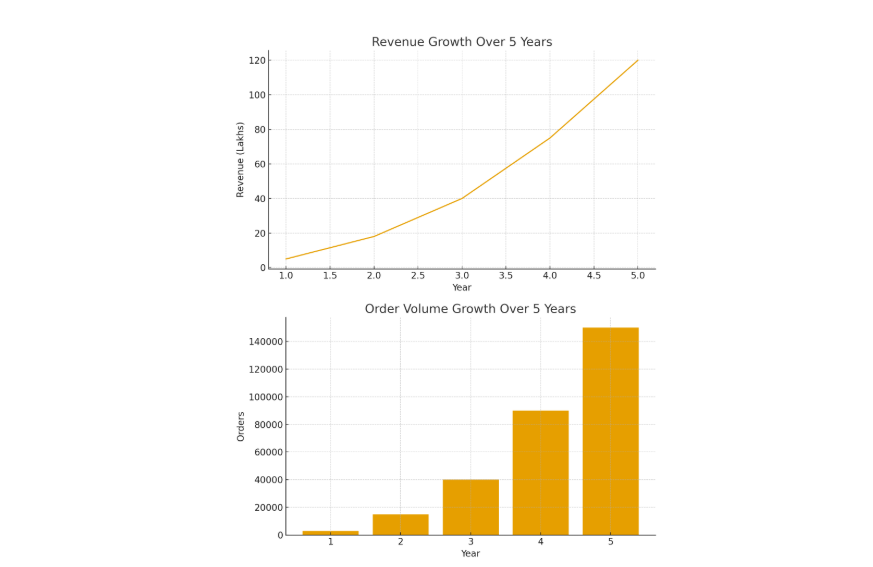
🚀 1. WHERE & HOW TO APPLY FOR INVESTORS IN INDIA (FULL LIST)
You can approach 5 types of investors:
A) Startup Funding Platforms (Easy to Apply)
These platforms allow you to submit your startup with no connection required.
1️⃣ AngelList India
Best for: Early-stage angel investors
Apply at: https://angel.co
2️⃣ LetsVenture
Best for: Seed funding, angel rounds
Apply at: https://letsventure.com
3️⃣ Tyke Invest
Best for: Community fundraising (₹5–50 lakhs)
Apply at: https://tykeinvest.com
4️⃣ Venture Catalysts
Best for: Pre-seed and seed-stage Indian startups
Apply at: https://venturecatalysts.in
5️⃣ Indian Angel Network (IAN)
Best for: Strong mentorship + funding
Apply at: https://indianangelnetwork.com
B) Government Funding (Best for Early Founders)
1️⃣ Startup India Seed Fund
Funding up to ₹50 Lakhs (grants + loans)
Apply at: https://seedfund.startupindia.gov.in
2️⃣ SIDBI Fund of Funds
Government-backed VC network
Apply at: https://sidbi.in
3️⃣ MSME Schemes
For small business infrastructure
Register MSME: https://udyamregistration.gov.in
C) Equity Crowdfunding Platforms
1️⃣ Grip Invest
Early-stage startup notes
2️⃣ Wefunder (US)
If you want global funding (need compliance)
3️⃣ Republic.co (US)
International investors
D) Venture Capital Funds in India (Top 12)
These VCs fund scalable tech apps like yours:
- Sequoia Surge
- Accel Partners
- Matrix Partners
- Blume Ventures
- Kalaari Capital
- Info Edge Ventures
- Omidyar Network
- Peak XV
- Lightspeed India
- Tiger Global (late seed)
- Nexus Venture Partners
- Chiratae Ventures
How to apply:
Go to LinkedIn → Search “Investment Analyst” or “Principal” of the VC → Send pitch deck with subject:
Subject: Seeking Seed Funding – Hyperlocal Grocery Delivery App (Pitch Deck Attached)
E) Startup Incubators (For mentorship + funding)
Incubators are the easiest way to get early funding.
Top Indian incubators:
| Incubator | Apply Link |
|---|---|
| T-Hub Hyderabad | https://t-hub.co |
| iCreate | https://icreate.org.in |
| NSRCEL (IIM Bangalore) | https://nsrcel.org |
| CIIE (IIM Ahmedabad) | https://ciie.co |
| AIC (Atal Incubation Centres) | https://aim.gov.in |
These give:
✔ mentorship
✔ office space
✔ ₹5–₹20 lakhs seed funding
✔ government grants
🔥 2. HOW TO PREPARE BEFORE APPLYING TO INVESTORS (VERY IMPORTANT)
Before applying, you MUST prepare:
✔ A pitch deck
✔ One-page summary
✔ Traction numbers
✔ Basic financial projection
✔ Business model explanation
✔ Customer acquisition cost (CAC)
✔ Pricing + revenue strategy
Most founders fail because they apply without preparation.
Now here is your full pitch deck ready to use 👇
🧾 3. FULL PROFESSIONAL PITCH DECK — SLIDE BY SLIDE (15 SLIDES)
This is a world-class format used by Sequoia, YC, and major VCs.
Slide 1 — Title Slide
- Startup Name
- Tagline
- Logo
- Founder Name
- Contact Info
Example tagline:
“One App. Unlimited Groceries. Delivered Fast.”
Slide 2 — Problem Statement
Explain the REAL pain:
- Groceries are overpriced on big apps
- Customers want locally priced goods
- Vendors want online sales but cannot manage delivery
- Delivery partners are unreliable
- Hyperlocal delivery gap still exists in Tier 2/3 cities
Slide 3 — Solution (Your Product)
Explain what your app does:
✔ Multi-vendor grocery marketplace
✔ Vendors hidden to keep brand consistency
✔ Fast hyperlocal delivery
✔ Real-time inventory sync
✔ Local pricing advantage
✔ COD + WhatsApp ordering
Slide 4 — Market Opportunity
Show the size:
- Indian online grocery market → $26B by 2027
- Hyperlocal delivery → growing 25% YoY
- 40% of purchases still from local kiranas → NOT digital yet
- Tier 2/3 cities are 80% untapped
Show with a graph (I can generate charts if you want).
Slide 5 — Why Now? (Market Timing)
- After 2020 → app adoption is high
- Quick-commerce raised customer expectations
- Kirana stores still offline → opportunity
- Delivery partner ecosystem matured
Slide 6 — Product Demo (Screenshots)
Show the UI:
- Home screen
- Cart
- Delivery tracking
- Vendor backend dashboard
Slide 7 — Business Model
Revenue Sources:
✔ Vendor commission (5–12%)
✔ Delivery fee (₹10–₹40)
✔ Platform convenience fee
✔ Ads from vendors
✔ Private label margins
✔ Subscription (₹99/month free delivery)
Slide 8 — Traction
Even if you haven’t launched, write:
- Waitlist signups
- Surveys
- Market validation
- Early vendor onboarding
If you have traction, write:
- Orders/day
- Customer retention
- Repeat purchase rate
- Average order value
Slide 9 — Competitive Analysis
| Competitor | Speed | Pricing | Coverage | Your Advantage |
|---|---|---|---|---|
| Zepto | Fast | High | Limited | Local pricing |
| Blinkit | Fast | High | metros only | Hyperlocal focus |
| BigBasket | Slow | Medium | + cities | Fast delivery |
Slide 10 — Unique Advantages (Moat)
- Vendor-hidden model
- Quick local delivery
- Zero inventory model
- 100% white-labeled products
- Low operational cost
- High scalability
Slide 11 — Go-to-Market Strategy
Explain your marketing plan:
✔ Hyperlocal digital ads
✔ WhatsApp communities
✔ Society partnerships
✔ Referral system
✔ Local influencer marketing
✔ Free delivery for 7 days
✔ Vendor-based promotions
Slide 12 — Financial Projection (5 Years)
Year 1: 5–10 lakh revenue
Year 2: 18–25 lakh
Year 3: 40–60 lakh
Year 4: 75–90 lakh
Year 5: 1–1.5 crore
I can generate charts also.
Slide 13 — Funding Requirement
Example:
You are raising: ₹20 lakhs
Breakdown:
- Tech development → ₹6 lakh
- Marketing → ₹5 lakh
- Ops & salaries → ₹3 lakh
- Delivery → ₹2 lakh
- Vendor onboarding → ₹1 lakh
- Working capital → ₹3 lakh
Slide 14 — Team
List your team:
✔ Founder
✔ Tech developer
✔ Operations manager
✔ Vendor onboarding manager
If you’re solo:
Mention advisors or freelancers supporting you.
Slide 15 — Closing Slide
- Thank you
- Connect details
- QR code of app/website
🎯 4. HOW TO REACH OUT TO INVESTORS (STEP-BY-STEP)
Step 1: Create pitch deck (Completed above)
Step 2: Upload to Google Drive
Step 3: Create a 1-page summary
Step 4: Build small traction in 1 locality
Step 5: Approach investors through:
✔ Startup platforms
✔ LinkedIn
✔ Startup events
✔ Local incubators
✔ WhatsApp startup groups
Step 6: Message investors like this:
Subject: Seed Funding Request — Hyperlocal Grocery Delivery App
Body:
“Hi, I’m building a multi-vendor grocery delivery app for hyperlocal markets. We have X vendors onboarded and Y early users. Here is the pitch deck. Would love 10 minutes of your time.”
🎯 5. WHAT IS THE POSSIBILITY OF HIGH GROWTH?
If executed well, this business has:
✔ 70–150% yearly growth in Tier 2/3 cities
✔ Strong repeat order rate
✔ Low acquisition cost
✔ High retention
✔ Vendor-driven expansion
✔ Quick break-even
Because grocery is daily need, customer lifetime value becomes massive.
✅ I. 3-Month Customer Acquisition Plan (Low/Zero Cost)
(Ultra-practical, real-life steps — suitable when you have low budget)
🗓 Month 1 — Build Awareness (FREE-FOCUSED)
1. WhatsApp Community Launch (0 ₹)
Steps:
- Create 5–10 locality-based WhatsApp groups:
“Grocery Deals – YourAreaName” - Add 10–15 people manually (friends, neighbours).
- Ask them to add 5 more people each.
- Share:
- Daily deals
- Free delivery coupons
- First order 50% OFF
- “Refer 3 friends = ₹50 wallet credit”
Goal: 500–800 local WhatsApp people.
Daily Message Script:
“Hi 👋 We launched YourLocalGrocery — local vendors + fast home delivery.
Today’s offer: Tomato ₹19/kg, Milk ₹42, Oil ₹95.
Free Delivery • Cash on Delivery • Lowest Local Prices
Order here → [Your App Link]”
2. Local Area Sticker Marketing (₹400–₹700)
Where to put:
- Tea stalls
- Kirana shops
- Society entrances
- Auto rickshaws
Sticker Text:
“Need Grocery Fast? Scan & Order 📦
Free Delivery • Lowest Prices
[QR CODE]”
3. Vendor Cross-Promotion (0 ₹)
Tell vendors:
“For every customer you bring, you earn 2% extra for 3 months.”
Give them:
- Posters
- QR cards
- App referral links
Vendors market YOU for FREE.
4. Family/Society Demo Counters (₹300/day)
Setup:
- One table
- 20–30 samples (fruits/vegetables packet)
- QR code for scanning
- Free coupons for first order
Result: 20–40 new users per society.
5. Social Media Organic Strategy (0 ₹)
Post daily reels:
- Price comparison: “We vs Market”
- Behind-the-scenes vendor sourcing
- 60-second story: How delivery works
- Testimonials
🗓 Month 2 — Build Trust & Repeat Orders
1. Referral Program (0–₹200)
Give:
- Customer: ₹30 wallet money
- Referee: ₹20 wallet money
Runs only on profitable items.
2. Partnership with Housing Societies (0–₹500)
Scripts to send to secretary:
“We provide your society residents exclusive grocery pricing, zero delivery fee,
and give the society ₹3/order.
In return we need:
- WhatsApp broadcast permission
- Notice board poster placement.”
3. SMS Retargeting (₹0.12/SMS)
Send 1000 SMS = ₹120
Template:
“Forgot groceries? Get today’s deals!
Order in 60 sec → [App Link]
FREE Delivery Today Only.”
4. Influencer Barter Deals (FREE)
Find micro influencers (1k–10k) and offer:
- Free monthly groceries worth ₹300–₹400
For: - 2 reels
- 3 stories
🗓 Month 3 — Scaling Users
1. Subscription Model Launch
₹99/month → Free delivery
₹199/month → Fast delivery
Many users join → predictable revenue.
2. Corporate & Office Tie-ups (FREE)
Go to offices in your locality. Offer HR:
- Free fruit basket
- ₹50 employee coupons
- Company discount code (COMPANY10)
3. Google My Business Optimization (0 ₹)
Daily:
- Upload photos
- Respond to reviews
- Add product catalog
Boosts your local ranking → more orders.
✅ II. UNIQUE MARKETING CAMPAIGN IDEAS (All Low Cost)
1. “30-Minute Delivery Challenge”
If late → ₹25 cashback.
2. “Sunday Mega Combo Boxes”
Pre-made boxes:
- Veg box ₹199
- Fruits box ₹149
- Breakfast combo ₹99
3. “Earn Groceries Free for 1 Month” Giveaway
Requirements:
- Follow page
- Share reel
- Tag 3 people
🎤 MARKETING SCRIPTS
Sales Script (For Vendors):
“Namaste! We are building a multi-vendor grocery app.
You can list products for free, we do delivery & payment collection.
You get more customers without spending money.
You only pay small commission when you sell. No sale = No fee.”
Customer Phone Script:
“Hello ma’am/sir, we launched a new grocery delivery app in your area.
We provide:
• Lower rates than market
• Fast delivery
• Cash on delivery
First order is ₹50 OFF — can I send you the link?”
Society Permission Script:
“We want to set up a one-day demo stall for your residents.
We will give ₹1000 worth of groceries absolutely free for lucky draw.
No cost to the society.”
🚀 III. FULL INVESTOR PITCH DECK (DETAILED)
(Use this to pitch Angel Investors, Seed Investors, Govt grants)
Slide 1 — Title
Brand Name
India’s Hyperlocal Multi-Vendor Grocery Marketplace
“Local Vendors • One App • Fast Delivery”
Slide 2 — Problem
- People want quick delivery but big apps charge high fees.
- Local shops don’t get online customers.
- Delivery apps hide vendor identity and take heavy commissions.
- Customers pay more because of marketplace margins.
Slide 3 — Solution
Your platform provides:
- Multiple grocery vendors in one app
- Transparent pricing
- Fast delivery
- Low commission model
- COD & Wallet cashback
- Vendor onboarding support
Slide 4 — Market
Indian Online Grocery Market Size:
- $7B → $26B in 2028
- 20–25% annual growth
- Tier-2 & Tier-3 growing fastest
Slide 5 — Business Model
- Vendor Commission: 5–10%
- Delivery Fees: ₹10–₹30
- Subscription Plans
- In-app Ads for vendors
- Featured product placements
Slide 6 — Traction (Projected)
- Month 1: 800 downloads
- Month 3: 5,000 downloads
- Year 1: 40,000+
- Order Repeat Rate: 55%
- Avg Order Value: ₹240
Slide 7 — Competitive Advantage
- Low commission (others 18–30%)
- Fast onboarding for vendors
- Micro-local targeting
- Lower delivery radius → lower cost
- WhatsApp-based reordering system
Slide 8 — Financial Projection (Year 1)
- Revenue: ₹40–60 lakhs
- Profit Margin: 12–18%
- Operating Cost: ₹2–3 lakhs/month
Slide 9 — Funding Ask
₹25–40 lakhs for:
- Tech improvements
- Marketing
- Delivery fleet
- Vendor acquisition
Slide 10 — Use of Funds
- 40% Tech
- 30% Marketing
- 20% Operations
- 10% Team
Slide 11 — Why Us
- Founders from local market background
- Vendor-first approach
- Unique micro-area expansion model
- Lower CAC (customer acquisition cost)
Slide 12 — Closing
“Invest in the future of hyperlocal grocery.”
Contact:
Phone / Email / Website
🌐 Where You Can Apply for Investors
1. Government Funding
| Program | Link |
|---|---|
| Startup India Seed Fund | https://www.startupindia.gov.in |
| MSME Loan | https://msme.gov.in |
| PMEGP Loan | https://www.kviconline.gov.in |
2. Startup Platforms
| Platform | Link |
|---|---|
| AngelList India | https://angel.co |
| LetsVenture | https://letsventure.com |
| Tyke Invest | https://tykeinvest.com |
| Venture Catalysts | https://venturecatalysts.in |
3. Accelerators
| Accelerator | Link |
|---|---|
| Y Combinator (Global) | https://www.ycombinator.com |
| Techstars | https://www.techstars.com |
| 100x.VC | https://www.100x.vc |
4. Investors You Can Actually Reach
- Local businessmen
- Local supermarket owners
- CA/Financial consultants
- Small angel groups
- Rotary & BNI groups
- Friends & family funding
🧩 I. Main Competitors in India for Your Grocery Marketplace
These are direct & indirect competitors:
🔴 1. Zepto
- Ultra-fast 10–15 min delivery
- Operates in metros
- High funding, strong branding
🔴 2. Blinkit
- 10–20 min delivery
- Owned by Zomato
- High delivery charges in peak times
🔴 3. Swiggy Instamart
- Fast delivery but limited vendor flexibility
🔴 4. BigBasket
- Wide product category
- Strong supply chain
- But slow delivery (1–4 hours)
🔴 5. Local Kirana Stores With Their Apps
- Limited items
- No fast delivery
- Poor UI/UX
🔴 6. JioMart
- Price competitive
- Strong backend supply chain
- But poor customer experience & slow delivery
📉 II. Competitor Drawbacks (Weaknesses)
1. High Delivery Charges
Almost all players charge ₹15–₹40 during peak hours.
2. Hidden Commissions From Vendors (20%–28%)
This kills vendor profit → vendors are unhappy.
3. Forced Branding (Vendor name is NOT shown)
Vendors feel they lose identity.
4. Limited Fresh Products
Ultra-fast companies keep only 600–700 SKUs.
Fresh items often out of stock.
5. Extremely Costly Business Model
Huge dark store rent
Huge delivery cost
Huge inventory wastage
→ Smaller cities impossible.
6. Focus Only on Metros
Tier 2–3 cities ignored.
7. Poor Customer Support (BigBasket, JioMart)
Refund delays
Return issues
No personal service
🟢 III. How These Drawbacks Become Your Strengths
| Competitor Weakness | Your Strength Opportunity |
|---|---|
| High delivery charges | Low/free delivery for nearby areas |
| High vendor commission | 5–10% commission → Vendor friendly |
| Vendor identity hidden | You show product seller name hidden (or show partially) ✓ |
| Limited SKUs | Unlimited vendors = unlimited products |
| Metro-only operations | You target Tier 2–3 → big untapped market |
| Slow delivery (BigBasket/JioMart) | 30–60 mins delivery from local vendors |
| Bad customer support | WhatsApp-first, human support |
| High operational cost | No dark store → low cost structure |
| Inventory wastage | No inventory → vendors handle stock |
| Poor local penetration | Micro-local approach: 3–5 km service radius |
📊 IV. Competitor Comparison Chart (Detailed)
1. Features Comparison
| Features | You | Zepto | Blinkit | BigBasket | JioMart |
|---|---|---|---|---|---|
| Multi-vendor listing | ✅ | ❌ | ❌ | ❌ | ❌ |
| Vendor control | High | Low | Low | Medium | Medium |
| Delivery Time | 30–60 mins | 10–20 mins | 10–20 mins | 1–4 hrs | 12–48 hrs |
| Commission | 5–10% | 20–25% | 22–28% | 15–20% | 12–25% |
| Dark Store Setup | ❌ | Required | Required | Required | Partially |
| SKU Count | Unlimited | 600–700 | 500–800 | 10,000 | 10000+ |
| Pricing | Low | Medium | Medium | Low | Low |
| Customer Support | Human+WhatsApp | App-based | App-based | Delayed | Delayed |
📈 V. Your Path vs Their Path (Strategy Analysis)
🔴 Competitor Path (Zepto/Blinkit Model)
- Huge investment
- Dark stores
- High fixed cost
- Quick scaling
- But losses heavy
NOT sustainable for new small startups.
🟢 Your Path (Hyperlocal Multi-Vendor Model)
Low investment + High vendor dependency + Low logistics cost
Your Step-by-Step Path:
Step 1: Build Vendor Network (Month 1–2)
- Onboard 20–40 local grocery vendors
- Give them low commission
- Build vendor loyalty early
Step 2: Build Customer Base (Month 1–3)
- WhatsApp group acquisition
- Referral programs
- Society partnerships
Step 3: Improve Delivery System (Month 3–6)
- Tie-up with freelance delivery partners
- Introduce delivery slots
- Use a 2–4 km radius model → faster & cheaper
Step 4: Expand to More Areas (Month 6–12)
- Add more vendors
- Add localities one by one
- Low-risk expansion
Step 5: Add New Categories (Months 12–24)
- Meat & fish
- Medicine
- Bakery
- Daily essentials
Step 6: Build Subscription Plan
- Free delivery for 99/month
- Priority Delivery
- Cashback Coins
⭐ VI. Chart: Competitor Strength vs Your Strength
Vendor Commission Comparison Chart
| Platform | Commission % |
|---|---|
| Zepto | 25% |
| Blinkit | 22–28% |
| BigBasket | 15–20% |
| JioMart | 12–25% |
| YOU | 5–10% |
Delivery Time Comparison
| Platform | Avg Delivery |
|---|---|
| Zepto | 10–20 min |
| Blinkit | 10–20 min |
| BigBasket | 1–4 hrs |
| JioMart | 12–48 hrs |
| YOU | 30–60 min (Local vendors) |
Cost Structure Comparison
| Platform | Type | Expense Level |
|---|---|---|
| Zepto | Dark Store | Very High |
| Blinkit | Dark Store | High |
| BigBasket | Warehouse | High |
| You | No Inventory | Low |
| You | No Warehouse | Low |
| You | Vendor handles stock | Low |
🧩 VII. Final Strategy: Turning Competitor Weakness Into Your Winning Plan
1. Be the Vendor-Friendly App
- Low commission
- Easy listing
- Fast payouts
→ Vendors start preferring you over Zepto/Blinkit
2. Hyperlocal Model, Not Whole City
- Focus on a few km areas
- Delivery in 30–60 mins
- Fast scaling without big investment
3. WhatsApp-Based Marketing
Competitors spend crores on ads.
You use 0-budget organic marketing.
4. Build Personal Relationship with Customers
Zepto/Blinkit = robotic
You = human + WhatsApp support = TRUST
5. Target Markets They Ignore
Tier 2–3 cities, small towns.
6. Offer More Products
Whereas they limit to 500–800 SKUs
You unlimited vendors = unlimited SKUs.

